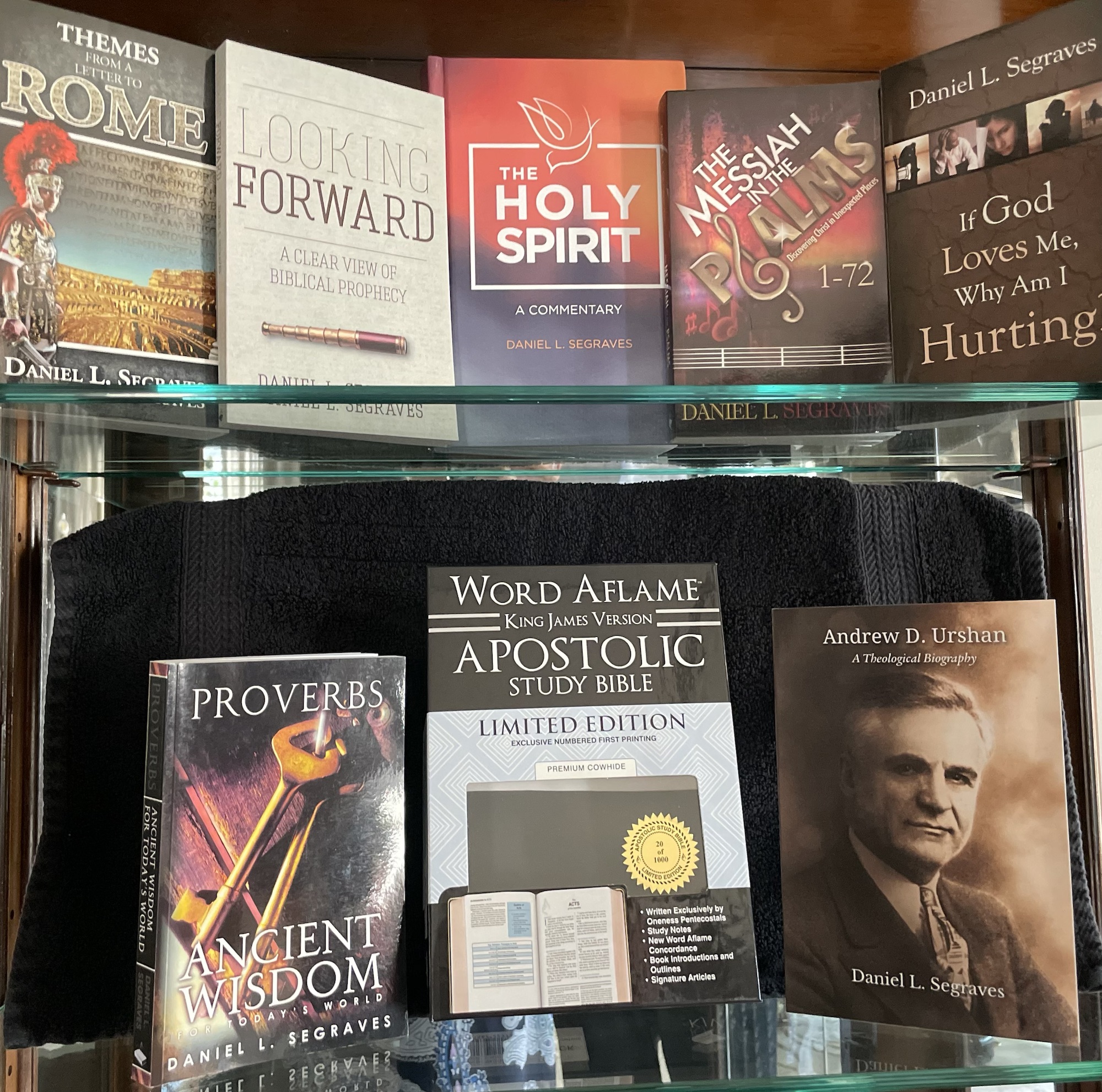

Today I completed an examination of each use of the phrase “the Spirit of God” in the Pentateuch. The last of these was the story of Balaam in Numbers. I have always been astounded not just by a talking donkey, but also by the fact that Balaam carried on a conversation with the donkey without any indication that he thought it was odd to do so!
But for the purposes of this project, how could it be that the Spirit of God would come upon a “prophet” who charged a “diviner’s fee” (Numbers 22:7) and who ordinarily resorted to sorcery (Numbers 24:1)? How could it be that Balaam, who later led Israel to trespass against the Lord (Numbers 31:1), could utter such majestic messianic prophecies?
One insight from this account is that when the Spirit of God comes upon someone, it is no indication of God’s approval of that person’s lifestyle or theology, even though this event can result in the divine purpose being accomplished.
The reason I am posting these reports and observations on this writing project is to keep a kind of diary on my progress. My blog is set up to share posts on Twitter, so if this is interesting to you, I’m glad.
Keep in mind that this is a work in progress, and I may revise anything as I go along.
- He was led as a lamb to the slaughter (Isaiah 53:7).
- Back to school ….
- Introducing my second volume on Psalms to an adult Sunday school class.
- My mother, Agnes Segraves, would have been 100 years old today.
- Second volume of The Messiah in the Psalms is now available in Kindle format.
- Do you know the meaning of your name?
- What does a Calvinist say after falling down the stairs?
- A Wonderful Gift for Babies.
- Let Us Make Man [Revisited]
- My 115 year old Christmas gift.
- Update on Book Signing this Wednesday, December 3, 2025 at 10 a.m.
- Have Thine Own Way
- Book signing event coming up December 3, 2025
- Thanks for visiting my book signing event!
- Will I see you at 9:15 tonight?
- UPCI GENERAL CONFERENCE 2025
- New book available in both paperback and eBook formats.
- New book now available at pentecostalpublishing.com
- At last, Psalms volume 2 has arrived!
- All that Thrills My Soul
- Closer by the moment!
- Back to my roots.
- Nearing the finish line.
- The Hermeneutical Circle and Canonical-Compositional Hermeneutics
- It has taken me only about 2,555 days ….
- Your greatest power.
- The Role of Tongues in Praying in the Spirit
- How videos are produced at the UPCI headquarters.
- Is speaking in tongues the evidence or the sign of baptism with the Holy Spirit?
- Sixty years of ministry.
- How consumerism redefines our values.
- Jesus taught hermeneutics.
- Pneumatology at Urshan Graduate School of Theology
- Purpose Institute and Bible Project
- Israel and Paul’s great sorrow and continual grief.
- Goodbye World, Goodbye!
- The first purchase for our new home.
- Good News!
- With gratitude ….
- All done!
- Almost there ….
- A New Year and a New Era for Logos Bible Software
- Marching on …
- Psalm 92 and Old Age
- Here’s what has happened in recent weeks.
- Somewhere …
- A glance toward the future from a very old psalm: Psalm 90
- Does Psalm 89 include an internal contradiction?
- Psalm 88 … Is There Any Hope?
- Is Psalm 87 a Pentecostal psalm?
- Now, on to Psalm 87
- Celebrating our first date!
- At last, Psalm 85 is finished.
- Videos on YouTube
- The Christology of John: In the Beginning [video]
- The Christology of John: In the Beginning
- Interesting and little known information about the New King James Version.
- Checking out the $130,000 Shigeru Kaiwai.
- Daniel and Susan Segraves on the Nancy Grandquist Podcast
- A Surprising Discovery of a Blog Written by David K. Bernard and Something I Didn’t Know About Myself.
- Messiah in the Psalms, Lesson Three, Discovering Christ in Unexpected Places
- Messiah in the Psalms, Lesson Two, Discovering Christ in Unexpected Places
- Messiah in the Psalms: Discovering Christ in Unexpected Places, Lesson One
- Pentecost Sunday at The Sanctury UPC
- Tomorrow…Pentecost Sunday
- Urshan University
- Living a Holy Life
- Here’s a sign for you …
- Good news from Urshan Graduate School of Theology!
- Presentation at the Urshan Graduate School of Theology Symposium
- Morning Has Broken
- An Unusual Post
- Urshan Symposium of Apostolic Pentecostal Scholars
- Learning Biblical Aramaic
- Substantial Savings Until December 31, 2023
- Getting Up to Date on the Psalms Project
- Praying for the Peace of Jerusalem
- Hamas [חמס]
- Curriculum Vitae
- Letting Our Hair Down: Another Look at I Corinthians 11:2-16 [A]
- Another Look at I Corinthians 11:10: A Plea for Caution
- Upcoming Urshan Symposium of Apostolic Pentecostal Scholars
- First-Century Jewish Christology
- First-Century Jewish Christology
- First Century Jewish Christology
- First Century Jewish Christianity
- First Century Jewish Christology
- 15% discount on my books until July 14, 2023
- “The sick … shall recover” (Mark 16:18).
- The Arkansas District Camp Meeting is scheduled for July 11-14, 2023.
- Oneness Pentecostalism: Race, Gender, and Culture
- Bits and Pieces ….
- The Messiah in the Psalms
- Psalm 83 and the future of volumes 2 and 3 of The Messiah in the Psalms
- Psalm 82 and its 2389 words.
- Psalm 81 … it took a while, but now it’s finished!
- Finding the time to do the important thing.
- I will utter dark sayings of old (Psalm 78:2).
- Back to school ….
- No Respecter of Persons
- Writing well.
- Is Thy Heart Right With God?
- A visit to the seminary classroom via the Book of Proverbs
- The Ten Commandments
- We arrive in Orlando!
- Celebrating Our Ninth Anniversary!
- God Chose a Day of Rest
- “The New Birth,” Second Session, Purpose Institute
- Finally, the thesis.
- The Encyclopedia Britannica and Baptism in the Name of Jesus Christ
- The Pneumatology of the Minor Prophets
- “The New Birth” offered by Purpose Institute
- The Addiction of Sin: Lesson 13
- My Journey from Theory to Thesis
- The Addiction of Sin: Lesson 12
- Standing on Holy Ground …
- The joy of meeting old friends by surprise!
- The Addiction of Sin: Lesson 11
- The Addiction of Sin: Lesson 10
- Charity Gayle
- The Addiction of Sin: Lesson 9
- The Addiction of Sin: Lesson 8
- The Most Important Question: What Shall We Do?
- The Addiction of Sin: Lesson 7
- The Addiction of Sin: Lesson 6
- The Addiction of Sin: Lesson 5
- The Addiction of Sin: Lesson 4
- Sin as an Addiction: Lesson 3
- Sin as an Addiction: Lesson 2
- The Addiction of Sin
- Thoughts about the Use of the King James Version
- To Know the Son is to Know the Father
- The Use of the Hebrew Scriptures in the New Testament: An Introduction to Canonical-Compositional Hermeneutics
- What I’ve been doing in the writing ministry since 2017
- “I Bowed on My Knees and Cried Holy”
- Draw Me Nearer: A good theme for 2022
- The day I wore suspenders to school
- How has God directed your steps in the early days of 2022?
- Who will direct your steps in 2022?
- A Pentecostal Church in Chin State Burned Down by the Burmese Army | Persecution
- Education in Transition: From Judaism to Christianity
- My Seventy-Sixth Birthday: October 29, 2022
- Daily Wisdom 353: Proverbs 15:21
- Daily Wisdom 352: Proverbs 15:20
- Daily Wisdom 351: Proverbs 15:19
- Daily Wisdom 350: Proverbs 15:18
- Thanks for stopping by to check out my twenty-first book!
- Book Signing Today at the UPCI 2021 General Conference
- Daily Wisdom 349: Proverbs 15:17
- Daily Wisdom 348: Proverbs 15:16
- Book signing at 2021 UPCI general conference
- Daily Wisdom 347: Proverbs 15:15
- Daily Wisdom 346: Proverbs 15:14
- Daily Wisdom 345: Proverbs 15:13
- Our eighth anniversary!
- Daily Wisdom 344: Proverbs 15:12
- Daily Wisdom 343: Proverbs 15:11
- Daily Wisdom 342: Proverbs 15:10
- Daily Wisdom 341: Proverbs 15:8-9
- Daily Wisdom 340: Proverbs 15:7
- Daily Wisdom 339: Proverbs 15:6
- Daily Wisdom 338: Proverbs 15:5
- Daily Wisdom 337: Proverbs 15:4
- Daily Wisdom 336: Proverbs 15:3
- Daily Wisdom 335: Proverbs 15:2
- Daily Wisdom 334: Proverbs 15:1
- Invitation to participate in the Pentecostal Publishing House Blog
- Daily Wisdom 333: Proverbs 14:35
- Daily Wisdom 332: Proverbs 14:34
- Daily Wisdom 331: Proverbs 14:33
- Daily Wisdom 330: Proverbs 14:32
- Daily Wisdom 329: Proverbs 14:31
- Daily Wisdom 328: Proverbs 14:30
- Daily Wisdom 327: Proverbs 14:29
- Daily Wisdom 326: Proverbs 14:28
- Daily Wisdom 325: Proverbs 14:26-27
- Daily Wisdom 324: Proverbs 14:25
- Daily Wisdom 323: Proverbs 14:24
- Daily Wisdom 322: Proverbs 14:23
- Daily Wisdom 321: Proverbs 14:22
- A bit of insight on Acts 22:16
- Daily Wisdom 320: Proverbs 14:20-21
- Daily Wisdom 319: Proverbs 14:19
- Daily Wisdom 318: Proverbs 14:18
- Daily Wisdom 317: Proverbs 14:17
- Daily Wisdom 316: Proverbs 14:16
- Daily Wisdom 315: Proverbs 14:15
- Daily Wisdom 314: Proverbs 14:14
- Daily Wisdom 313: Proverbs 14:13
- Daily Wisdom 312: Proverbs 14:12
- Daily Wisdom 311: Proverbs 14:11
- Daily Wisdom 310: Proverbs 14:10
- Daily Wisdom 309: Proverbs 14:9
- Daily Wisdom 308: Proverbs 14:8
- Daily Wisdom 307: Proverbs 14:7
- Daily Wisdom 306: Proverbs 14:6
- Daily Wisdom 305: Proverbs 14:5
- A brief lesson on apostles, prophets, evangelists, pastors and teachers.
- Daily Wisdom 304: Proverbs 14:4
- Daily Wisdom 303: Proverbs 14:3
- Daily Wisdom 302: Proverbs 14:2
- The Roots of Apostles, Prophets, Evangelists, Pastors and Teachers in the Book of Psalms
- Follow-Up on Massachusetts-Rhode Island Summer Summit
- Session 3: Bible Lesson for Friday, July 15, 2021 Massachusetts – Rhode Island Summer Summit
- Session 2: Bible Lesson for Thursday, July 15, 2021 Massachusetts – Rhode Island Summer Summit
- Session 1: Bible Lesson for Wednesday, July 14, 2021 Massachusetts – Rhode Island Summer Summit
- An Invitation to Teach at the Upcoming Massachusetts – Rhode Island District Summer Summit
- Daily Wisdom 301: Proverbs 14:1
- The Day of Pentecost at Life Church
- Daily Wisdom 300: Proverbs 13:25
- Daily Wisdom 299: Proverbs 13:24
- Daily Wisdom 298: Proverbs 13:23
- Daily Wisdom 297: Proverbs 13:22
- Daily Wisdom 296: Proverbs 13:21
- Daily Wisdom 295: Proverbs 13:20
- Daily Wisdom 294: Proverbs 13:19
- Daily Wisdom 293: Proverbs 13:18
- Daily Wisdom 292: Proverbs 13:17
- Daily Wisdom 291: Proverbs 13:16
- Daily Wisdom 290: Proverbs 13:15
- Daily Wisdom 289: Proverbs 13:14
- Daily Wisdom 288: Proverbs 13:13
- Daily Wisdom 287: Proverbs 13:12
- Daily Wisdom 286: Proverbs 13:11
- Daily Wisdom 285: Proverbs 13:10
- Daily Wisdom 284: Proverbs 13:9
- Daily Wisdom 283: Proverbs 13:8
- Daily Wisdom 282: Proverbs 13:7
- Daily Wisdom 281: Proverbs 13:6
- Back to the classroom!
- Video: The Holy Spirit in Galatians 6
- The Holy Spirit in Galatians 6
- Daily Wisdom 280: Proverbs 13:5
- Daily Wisdom 279: Proverbs 13:4
- Daily Wisdom 278: Proverbs 13:3
- Video: The Holy Spirit in Galatians 5
- The Holy Spirit in Galatians 5-6
- Daily Wisdom 277: Proverbs 13:2
- Daily Wisdom 276: Proverbs 13:1
- Video: The Holy Spirit in Galatians 1-4
- The Holy Spirit in Galatians
- Video: The Holy Spirit in II Corinthians
- The Holy Spirit in II Corinthians
- Daily Wisdom 275: Proverbs 12:28
- Daily Wisdom 274: Proverbs 12:27
- Daily Wisdom 273: Proverbs 12:26
- Daily Wisdom 272: Proverbs 12:25
- Daily Wisdom 271: Proverbs 12:24
- Daily Wisdom 270: Proverbs 12:23
- Daily Wisdom 269: Proverbs 12:22
- Daily Wisdom 268: Proverbs 12:21
- Excellent and thought-provoking post by Dr. Robin Johnston
- Interesting comment on Acts 22:16
- Daily Wisdom 267: Proverbs 12:20
- Daily Wisdom 266: Proverbs 12:19
- Daily Wisdom 265: Proverbs 12:18
- Daily Wisdom 264: Proverbs 12:17
- Daily Wisdom 263: Proverbs 12:16
- Daily Wisdom 262: Proverbs 12:15
- A return to the classroom
- Daily Wisdom 261: Proverbs 12:14
- Daily Wisdom 260: Proverbs 12:13
- Daily Wisdom 259: Proverbs 12:12
- The Holy Spirit in I Corinthians 12-14
- The Holy Spirit in I Corinthians 12-14
- Daily Wisdom 258: Proverbs 12:11
- My students . . . my peers.
- Daily Wisdom 257: Proverbs 12:10
- A big discovery!
- Daily Wisdom 256: Proverbs 12:9
- Daily Wisdom 255: Proverbs 12:8
- The Holy Spirit in I Corinthians 2:1-5, 10-16; 3:16; 6:11, 19; 7:40; 12:1
- The Holy Spirit in I Corinthians 2:1-5, 10-16; 3:16; 6:11, 19; 7:40; 12:1
- Daily Wisdom 254: Proverbs 12:7
- Logos 9 Discount Ends February 1, 2021
- Daily Wisdom 253: Proverbs 12:6
- 777 views!
- Daily Wisdom 252: Proverbs 12:5
- The Holy Spirit in Romans 15:13, 16, 18-19, 30
- Daily Wisdom 251: Proverbs 12:4
- The Holy Spirit in the Book of Romans 15:13, 16, 18-19, 30
- Daily Wisdom 250: Proverbs 12:3
- Daily Wisdom 249: Proverbs 12:2
- Daily Wisdom 248: Proverbs 12:1
- Daily Wisdom 247: Proverbs 11:31
- The Holy Spirit in Romans 8:26-27; 9:1; 14:17
- The Holy Spirit in the Book of Romans 8:27; 9:1-3; 14:17; 15:13, 16, 18-19, 30
- Daily Wisdom 246: Proverbs 11:30
- Daily Wisdom 245: Proverbs 11:29
- Daily Wisdom 244: Proverbs 11:28
- The Holy Spirit in Romans 8:18-27
- The Holy Spirit in Romans 8:18-27
- Daily Wisdom 243: Proverbs 11:27
- Stories from my life: My call to preach the gospel
- Daily Wisdom 242: Proverbs 11:26
- Daily Wisdom 241: Proverbs 11:24-25
- Stories from my life
- Daily Wisdom 240: Proverbs 11:23
- Daily Wisdom 239: Proverbs 11:22
- Daily Wisdom 238: Proverbs 11:21
- 6041
- Special Christmas Post
- Daily Wisdom 237: Proverbs 11:20
- Daily Wisdom 236: Proverbs 11:19
- Daily Wisdom 235: Proverbs 11:18
- Daily Wisdom 234: Proverbs 11:17
- Daily Wisdom 233: Proverbs 11:16
- Daily Wisdom 232: Proverbs 11:15
- Daily Wisdom 231: Proverbs 11:14
- Daily Wisdom 230: Proverbs 11:13
- 12 Days of Logos
- Daily Wisdom 229: Proverbs 11:12
- Daily Wisdom 228: Proverbs 11:10-11
- Daily Wisdom 227: Proverbs 11:9
- Another PPH blog post about my new book,
- Daily Wisdom 226: Proverbs 11:8
- Daily Wisdom 225: Proverbs 11:7
- Daily Wisdom 224: Proverbs 11:6
- Daily Wisdom 223: Proverbs 11:5
- Daily Wisdom 222: Proverbs 11:4
- Daily Wisdom 221: Proverbs 11:3
- My take on “My Tribute (To God be the Glory)” by Andrae Crouch
- Daily Wisdom 220: Proverbs 11:2
- Apostolic Study Bible and Logos Bible Software
- PPH sale includes my new book “The Holy Spirit.”
- Daily Wisdom 219: Proverbs 11:1
- Daily Wisdom 218: Proverbs 10:32
- Daily Wisdom 217: Proverbs 10:31
- Daily Wisdom 216: Proverbs 10:30
- Daily Wisdom 215: Proverbs 10:29
- Daily Wisdom 214: Proverbs 10:28
- Thanks to the Pentecostal Publishing House!
- Daily Wisdom 213: Proverbs 10:27
- Daily Wisdom 212: Proverbs 10:26
- Daily Wisdom 211: Proverbs 10:25
- Daily Wisdom 210: Proverbs 10:24
- Daily Wisdom 209: Proverbs 10:23
- Daily Wisdom 208: Proverbs 10:22
- Daily Wisdom 207: Proverbs 10:21
- Daily Wisdom 206: Proverbs 10:20
- Daily Wisdom 205: Proverbs 10:19
- A blog dedicated to the Holy Spirit
- A Light in Darkness: Stories of Grief and Loss
- Daily Wisdom 204: Proverbs 10:18
- Daily Wisdom 203: Proverbs 10:17
- Daily Wisdom 202: Proverbs 10:16
- Daily Wisdom 201: Proverbs 10:15
- Daily Wisdom 200: Proverbs 10:14
- Logos Bible Software: The software I use for research and writing
- Stirred by God
- Daily Wisdom 199: Proverbs 10:13
- Daily Wisdom 198: Proverbs 10:12
- Daily Wisdom 197: Proverbs 10:11
- Daily Wisdom 196: Proverbs 10:10
- Daily Wisdom 195: Proverbs 10:9
- David K. Bernard reminds us of the importance of voting
- Daily Wisdom 194: Proverbs 10:8
- Daily Wisdom 193: Proverbs 10:7
- Daily Wisdom 192: Proverbs 10:6
- Daily Wisdom 191: Proverbs 10:5
- Daily Wisdom 190: Proverbs 10:4
- New Books Available from the Pentecostal Publishing House
- Daily Wisdom 189: Proverbs 10:3
- Daily Wisdom 188: Proverbs 10:2
- Daily Wisdom 187: Proverbs 10:1
- Daily Wisdom 186: Proverbs 10
- Daily Wisdom 185: Proverbs 9:18
- “Leave the Oxen and Run”
- Daily Wisdom 184: Proverbs 9:17
- Daily Wisdom 183: Proverbs 9:16
- “A Light in Darkness: Stories of Grief and Loss”
- Review of “The Holy Spirit: A Commentary” on Pentecostal Publishing Blog
- Daily Wisdom 182: Proverbs 9:15
- Daily Wisdom 181: Proverbs 9:14
- Our seventh wedding anniversary!
- Pentecostal Publishing House
- Daily Wisdom 180: Proverbs 9:13
- Daily Wisdom 179: Proverbs 9:12
- Daily Wisdom 178: Proverbs 9:11
- Daily Wisdom 177: Proverbs 9:10
- Daily Wisdom 176: Proverbs 9:9
- Amazon Best Sellers List!
- Direct link to Kindle download of “The Holy Spirit: A Commentary”
- An easier way to view my interview with Kaleb Saucer
- Video interview on “The Holy Spirit: A Commentary”
- Daily Wisdom 174: Proverbs 9:7
- Daily Wisdom 173: Proverbs 9:3-6
- Preview “The Holy Spirit: A Commentary”
- Daily Wisdom 172: Proverbs 9:2
- Daily Wisdom 171: Proverbs 9:1
- Daily Wisdom 170: Proverbs 8:36
- “The Holy Spirit: A Commentary” now available from Amazon and Apple!
- Daily Wisdom 169: Proverbs 8:35
- Daily Wisdom 168: Proverbs 8:34
- Daily Wisdom 167: Proverbs 8:33
- Terry Baughman reviews “The Holy Spirit: A Commentary”
- “The Holy Spirit: A Commentary” is now available at pentecostalpublishing.com!
- Daily Wisdom 166: Proverbs 8:32
- Daily Wisdom 165: Proverbs 8:22-31
- Daily Wisdom 164: Proverbs 8:21
- How to buy my new book “The Holy Spirit: A Commentary”
- Daily Wisdom 163: Proverbs 8:20
- David K. Bernard comments on “The Holy Spirit: A Commentary”
- Daily Wisdom 162: Proverbs 8:19
- Daily Wisdom 161: Proverbs 8:18
- The book is in!
- Daily Wisdom 160: Proverbs 8:17
- Daily Wisdom 159: Proverbs 8:15-16
- Stan Gleason reviews “The Holy Spirit: A Commentary”
- Interview with Kaleb Saucer
- Daily Wisdom 158: Proverbs 8:14
- Daily Wisdom 157: Proverbs 8:13
- Daily Wisdom 156: Proverbs 8:12
- Daily Wisdom 155: Proverbs 8:11
- Daily Wisdom 154: Proverbs 8:10
- Daily Wisdom 153: Proverbs 8:9
- Daily Wisdom 152: Proverbs 8:8
- Daily Wisdom 151: Proverbs 8:7
- Good news on the new book project!
- Daily Wisdom 150: Proverbs 8:6
- Daily Wisdom 149: Proverbs 8:5
- Daily Wisdom 148: Proverbs 8:1-4
- Daily Wisdom 147: Proverbs 7:27
- Daily Wisdom 146: Proverbs 7:26
- Daily Wisdom 145: Proverbs 7:24-25
- Daily Wisdom 144: Proverbs 7:23
- Daily Wisdom 143: Proverbs 7:22
- Daily Wisdom 142: Proverbs 7:21
- Daily Wisdom 141: Proverbs 7:19-20
- Daily Wisdom 140: Proverbs 7:16-18
- Daily Wisdom 138: Proverbs 7:15
- Daily Wisdom 138: Proverbs 7:14
- Daily Wisdom 137: Proverbs 7:13
- Daily Wisdom 136: Proverbs 7:11-12
- Daily Wisdom 135: Proverbs 7:10
- Daily Wisdom 134: Proverbs 7:9
- Daily Wisdom 133: Proverbs 7:8
- Daily Wisdom 132: Proverbs 7:6-7
- Daily Wisdom 131: Proverbs 7:5
- Daily Wisdom 130: Proverbs 7:4
- Hope Anchors the Soul
- Daily Wisdom 129: Proverbs 7:3
- Daily Wisdom 128: Proverbs 7:1-2
- Daily Wisdom 127: Proverbs 6:34-35
- Daily Wisdom 126: Proverbs 6:33
- Daily Wisdom 125: Proverbs 6:32
- Daily Wisdom 124: Proverbs 6:30-31
- Daily Wisdom 123: Proverbs 6:27-29
- Daily Wisdom 122: Proverbs 6:26
- Daily Wisdom 121: Proverbs 6:25
- Daily Wisdom 120: Proverbs 6:24
- Daily Wisdom 119: Proverbs 6:23
- Daily Wisdom 118: Proverbs 6:22
- Daily Wisdom 117: Proverbs 6:21
- Daily Wisdom 116: Proverbs 6:20
- Daily Wisdom 115: Proverbs 6:19
- Daily Wisdom 114: Proverbs 6:18
- Daily Wisdom 113: Proverbs 6:17
- Daily Wisdom 112: Proverbs 6:16-19
- Seven years ago today . . .
- Daily Wisdom 111: Proverbs 6:14-15
- Daily Wisdom 110: Proverbs 6:13
- Daily Wisdom 109: Proverbs 6:12
- Congratulations to Urshan College and Urshan Graduate School of Theology!
- Daily Wisdom 108: Proverbs 6:10-11
- Daily Wisdom 107: Proverbs 6:9
- Daily Wisdom 106: Proverbs 6:8
- Daily Wisdom 105: Proverbs 6:7
- Daily Wisdom 104: Proverbs 6:6
- Daily Wisdom 103: Proverbs 6:1-5
- Daily Wisdom 102: Proverbs 5:23
- Daily Wisdom 101: Proverbs 5:22
- Daily Wisdom 100: Proverbs 5:21
- Two statements concerning the deity of Jesus in Acts 16
- Daily Wisdom 99: Proverbs 5:20
- God put a rainbow in the sky🎶
- Daily Wisdom 98: Proverbs 5:19
- Daily Wisdom 97: Proverbs 5:18
- Daily Wisdom 96: Proverbs 5:16-17
- Daily Wisdom 95: Proverbs 5:15
- Daily Wisdom 94: Proverbs 5:12-14
- Daily Wisdom 93: Proverbs 5:9-11
- Daily Wisdom 92: Proverbs 5:6-8
- Daily Wisdom 91: Proverbs 5:5
- If God Loves Me, Why Am I Hurting? 30
- Daily Wisdom 90: Proverbs 5:4
- Daily Wisdom 89: Proverbs 5:3
- If God Loves Me, Why Am I Hurting? 29
- Daily Wisdom 88: Proverbs 5:2
- If God Loves Me, Why Am I Hurting? 28
- Daily Wisdom 87: Proverbs 5:1
- If God Loves Me, Why Am I Hurting? 27
- Daily Wisdom 86: Proverbs 4:27
- If God Loves Me, Why Am I Hurting? 26
- Daily Wisdom 85: Proverbs 4:26
- Daily Wisdom 84: Proverbs 4:25
- If God Loves Me, Why Am I Hurting? 25
- Daily Wisdom 83: Proverbs 4:24
- If God Loves Me, Why Am I Hurting? 24
- Daily Wisdom 82: Proverbs 4:23
- Daily Wisdom 81: Proverbs 4:22
- Daily Wisdom 80: Proverbs 4:21
- Daily Wisdom 79: Proverbs 4:20
- Daily Wisdom 78: Proverbs 4:19
- Daily Wisdom 77: Proverbs 4:17-18
- Daily Wisdom 76: Proverbs 4:16
- Daily Wisdom 75: Proverbs 4:15
- Daily Wisdom 74: Proverbs 4:14
- Daily Wisdom 73: Proverbs 4:13
- Daily Wisdom 72: Proverbs 4:12
- Daily Wisdom 71: Proverbs 4:11
- Daily Wisdom 70: Proverbs 4:10
- Daily Wisdom 69: Proverbs 4:9
- Daily Wisdom 68: Proverbs 4:8
- Daily Wisdom 67: Proverbs 4:7
- Spirit filled voices … Spirit inspired words!
- Spirit filled voices … Spirit inspired words
- Daily Wisdom 66: Proverbs 4:6
- Daily Wisdom 65: Proverbs 4:4-5
- Daily Wisdom 64: Proverbs 4:3
- Daily Wisdom 63: Proverbs 4:1-2
- Update on “The Holy Spirit: A Commentary”
- Daily Wisdom 62: Proverbs 3:35
- Daily Wisdom 61: Proverbs 3:34
- Daily Wisdom 60: Proverbs 3:33
- Daily Wisdom 59: Proverbs 3:32
- Daily Wisdom 58: Proverbs 3:31
- Daily Wisdom 57: Proverbs 3:30
- Daily Wisdom 56: Proverbs 3:29
- Daily Wisdom 55: Proverbs 3:28
- Daily Wisdom 54: Proverbs 3:27
- Daily Wisdom 53: Proverbs 3:21-26
- Daily Wisdom 52: Proverbs 3:20
- Daily Wisdom 51: Proverbs 3:19
- Daily Wisdom 50: Proverbs 3:18
- Daily Wisdom 49: Proverbs 3:17
- Writing Update
- Daily Wisdom 48: Proverbs 3:15-16
- Daily Wisdom 47: Proverbs 3:14
- Daily Wisdom 46: Proverbs 3:13
- Daily Wisdom 45: Proverbs 3:11-12
- Daily Wisdom 44: Proverbs 3:9-10
- Daily Wisdom 43: Proverbs 3:8
- Daily Wisdom 42: Proverbs 3:7
- Daily Wisdom 41: Proverbs 3:6
- Daily Wisdom 40: Proverbs 3:5
- Daily Wisdom 39: Proverbs 3:4
- Daily Wisdom 38: Proverbs 3:3
- Daily Wisdom 37: Proverbs 3:2
- Daily Wisdom 36: Proverbs 3:1
- Daily Wisdom 35: Proverbs 2:20-22
- Daily Wisdom 34: Proverbs 2:18-19
- Daily Wisdom 33: Proverbs 2:17
- Daily Wisdom 32: Proverbs 2:15-16
- Daily Wisdom 31: Proverbs 2:14
- Daily Wisdom 30: Proverbs 2:13
- Daily Wisdom 29: Proverbs 2:12
- Daily Wisdom 28: Proverbs 2:11
- Daily Wisdom 27: Proverbs 2:10-22
- Daily Wisdom 26: Proverbs 2:9
- Daily Wisdom 25: Proverbs 2:8
- Daily Wisdom 24: Proverbs 2:7
- Daily Wisdom 23: Proverbs 2:6
- Daily Wisdom 22: Proverbs 2:1-5
- Wisdom 21
- Wisdom 20
- Wisdom 19
- Wisdom 18
- Wisdom 17 [and a brief excerpt from my upcoming volume on the Holy Spirit].
- Daily Wisdom 15
- Wisdom 16
- Daily Wisdom 14
- Daily Wisdom 13
- Daily Wisdom 12
- A good idea for use when socially distanced.
- Helpful information.
- Daily Wisdom 11
- Daily Wisdom 10
- His Eye is on the Sparrow
- Daily Wisdom 9
- Daily Wisdom 8
- Daily Wisdom 7
- Daily Wisdom 6
- Daily Wisdom 5
- Daily Wisdom 4
- Daily Wisdom 3
- Daily Wisdom 2
- Daily Wisdom 1
- Devotion 23: If God loves me, why am I hurting?
- Devotion 22: If God loves me, why am I hurting?
- Devotion 21: If God loves me, why am I hurting?
- Devotion 20: If God loves me, why am I hurting?
- Devotion 19: If God loves me, why am I hurting?
- Devotion 18: If God loves me, why am I hurting?
- Devotion 17: If God loves me, why am I hurting?
- Good News from the Pentecostal Publishing House
- Devotion 16: If God loves me, why am I hurting?
- Devotion 15: If God loves me, why am I hurting?
- Devotion 14: If God loves me, why am I hurting?
- Devotion 13: If God loves me, why am I hurting?
- Devotion 12: If God loves me, why am I hurting?
- Devotion 11: If God loves me, why am I hurting?
- Devotion 10: If God loves me, why am I hurting?
- Devotion 9: If God loves me, why am I hurting?
- Devotion 8: If God loves me, why am I hurting?
- Devotion 7: If God loves me, why am I hurting?
- Devotion 6: If God loves me, why am I hurting?
- Devotion 5: If God loves me, why am I hurting?
- Devotion 4: If God loves me, why am I hurting?
- Devotion 3: If God loves me, why am I hurting?
- Devotion 2: If God loves me, why am I hurting?
- Devotion 1: If God loves me, why am I hurting?
- Should we write in our Bibles?
- A tree of ice.
- “As the deer pants for the water brooks …” (Psalm 42:1).
- Today we awaken to this …
- A book rediscovered.
- A “Watch Night Service” Memory
- A New Year’s Resolution
- My response to a critique of my article “Marriage without a Helpmate?”
- A bit of time in Branson…
- A small family reunion …
- The Grand Finale
- You already know some Hebrew
- Hope for the Last Days
- Catching up on writing assignments
- There’s Something About That Name
- Seventy-three years ago today …
- Answering questions from a member of the Church of Christ
- Oneness insight on Colossians 2:2-3
- I awaken to the beginning…
- From Atlantic City to Indianapolis: Two UPCI General Conference Messages
- Our trip to Jonesboro, Arkansas.
- Retired … but still working?
- Video: The Holy Spirit in Romans, Lesson 3
- The Holy Spirit in Romans, Lesson 3
- Video: The Holy Spirit in the Book of Romans, Lesson 2
- The Holy Spirit in the Book of Romans, Second Lesson
- Video: The Holy Spirit in the Book of Romans, First Lesson
- The Holy Spirit in the Book of Romans
- Video: More about the Holy Spirit in the Book of Acts
- North American Youth Congress 2019
- More about the Holy Spirit in the Book of Acts
- Our study of the Holy Spirit continues …
- Video: The Holy Spirit in the Book of Acts
- The Holy Spirit in the Book of Acts: Study Guide
- Video: Looking Ahead to Pentecost
- Looking Ahead to Pentecost: Study Guide
- Video: The Holy Spirit in the New Testament before Pentecost
- The Holy Spirit in the Lives of People before the Day of Pentecost
- Video: An Introduction to the Holy Spirit in the New Testament
- An Introduction to the Holy Spirit in the New Testament: Study Guide
- The Holy Spirit in the New Testament
- A little bit of Hammond organ and Leslie speaker
- Making it easier to find my books.
- Video: The Book of Daniel, Second Lesson
- Video: The Book of Daniel, First Lesson
- Last Things
- The Book of Daniel
- First highlight … first note.
- Sandwiched in, but safe.
- Tickets for Gaither Family Fest 2019 – 3 Day Ticket, May 24, 25, 26
- One of my greatest regrets.
- Video: An Hour on Spiritual Gifts with the Hyphens
- Video: Susan Segraves shares her story.
- Talking with the Hyphens
- A Parable about Gifts
- A video with a few words about spiritual gifts.
- The Seven Motivators
- What? No regalia?
- A first time for everything …
- Holy Spirit manuscript finished.
- No More Questions. Video.
- No More Questions. PowerPoint Easter 2019
- No More Questions.
- From the Day of Pentecost Onward
- A chapter finished, another to begin.
- An important component of writing.
- An arm lost . . . a dream fulfilled.
- Goodbye, Howdershell. Hello, Wentzville.
- Yahweh, Jehovah, and Jesus
- A tender conscience
- Redesigned website.
- Terry Gunn plays “ Great Is Thy Faithfulness.”
- More on Psalm 110:1 and baptism
- Psalm 110:1 and Acts 2:38
- The Holy Spirit, Lesson 12B Video
- The Holy Spirit, Lesson 12A Video
- Daniel Segraves’ update on The Holy Spirit: An Apostolic View on Pneumatology
- The Holy Spirit: An Apostolic Perspective on Pneumatology, Lesson 12
- The Messiah in the Psalms and Second Peter and Jude now available as ebook downloads from Amazon, iBook and PPH
- Oneness Pentecostalism and Dispensationalism
- The Holy Spirit, Lesson 11 Video
- My daily prayers …
- Bringing back memories …
- A word from Daniel Segraves
- The Holy Spirit: An Apostolic Perspective on Pneumatology, Lesson 11
- The Holy Spirit, Lesson 10 Video
- Progress on “The Holy Spirit: An Apostolic Perspective on Pneumatology”
- The Holy Spirit: An Apostolic Perspective on Pneumatology, Lesson 10
- The Holy Spirit, Lesson 9 Video
- Now available in the Spanish language …
- The Holy Spirit: An Apostolic Perspective on Pneumatology, Lesson 9
- Another word on Jephthah and his daughter
- The Holy Spirit, Lesson 8 Video
- Two new books now available as iBook downloads
- The Holy Spirit: An Apostolic Perspective on Pneumatology, Lesson 8
- The Holy Spirit, Lesson 7 Video
- The first snowman of our married lives.
- Two new books available on Amazon Kindle!
- The Holy Spirit: An Apostolic Perspective on Pneumatology, Lesson 7
- The Holy Spirit, Lesson 6 Video
- The Holy Spirit: An Apostolic Perspective on Pneumatology, Lesson 6
- The Holy Spirit, Lesson 5 Video
- The Holy Spirit: An Apostolic Perspective on Pneumatology, Lesson 5
- The Holy Spirit, Lesson 4 Video
- The Holy Spirit: An Apostolic Perspective on Pneumatology, Lesson 4
- A delightful conversation with Bishop Billy McCool
- The Holy Spirit, Lesson 3 Video
- A Spectacular Night Time View of the Eiffel Tower During Our Visit to France in August 2018.
- Daniel Segraves plays “Is Your All on the Altar?”
- The Holy Spirit: An Apostolic Perspective on Pneumatology, Lesson 3
- Daniel Segraves plays “I’ll Be Home for Christmas.”
- Daniel Segraves Plays “Silent Night.”
- Daniel Segraves at the Piano
- The Holy Spirit, Lesson 2 Video
- The Holy Spirit: An Apostolic Perspective on Pneumatology, Lesson 2
- The Holy Spirit, Lesson 1 Video
- The Holy Spirit: An Apostolic Perspective on Pneumatology, Lesson 1
- Another new lesson submitted: Hope for the Last Days: As in the days
- New Lesson Submitted: In Like Manner
- Changes in teaching videos and updates on coming lessons
- The Spirit of the Lord in the Minor Prophets Video
- The Spirit of the Lord in the Minor Prophets
- A discovery from 30 years ago
- Logos Bible Software … I like it!
- Congratulations to the Urshan System
- I thank God for sparing my life.
- A word of wisdom from one doctor to another
- No One Ever Cared for Me Like Jesus
- Logos Bible Software 8
- “My Spirit” in the Book of the Twelve: Apostolic Pneumatology
- “My Spirit” in Isaiah and Ezekiel: Apostolic Pneumatology
- The Spirit of the LORD in Isaiah, Ezekiel, and Micah: Apostolic Pneumatology
- The Spirit of the LORD in Isaiah: Apostolic Pneumatology
- The Spirit of the LORD in I and II Kings: Apostolic Pneumatology
- The Spirit comes and goes in Samuel: Apostolic Pneumatology
- The Spirit of the LORD in Judges: Apostolic Pneumatology
- A surprising discovery in Joshua: Apostolic Pneumatology
- Anticipation of Pentecost in Numbers: Apostolic Pneumatology
- Balaam, his donkey, and Apostolic pneumatology
- A decision on the Apostolic pneumatology project
- Today’s report on the Apostolic pneumatology project.
- At work on “The Holy Spirit: An Apostolic Perspective on Pneumatology.”
- The Miracle of the Bierschenk Girls
- Five years of wedded bliss!
- A general conference memory
- Also at this general conference
- New at this general conference: Andrew D. Urshan: A Theological Biography
- A new book idea . . .
- An Amazing Story of Redemption
- Another Look at “Delivering Up the Kingdom”
- Bishop Timothy Dugas
- Aboard Air France
- Our last breakfast in France
- A rainy day in Paris . . .
- Our last day in Paris
- Strolling around Paris . . .
- Our Visit to France
- Andrew David Urshan Memorial
- Andrew David Urshan Memorial
- Matthew 28:19 and Granville Sharp’s Sixth Rule
- The Living Word
- Thoughts on John 17:5
- New Birth: Purpose Institute
- Let Us Make Man
- This is That: An Examination of Peter’s Use of Joel from the Perspective of Canonical-Compositional Hermeneutics
- Apostolic Hermeneutics: Things Hard to be Understood
- A Further Response to Calvin Beisner
- A Response to Calvin Beisner’s Explanation of Acts 2:38
- Predestination?
- Binding and Loosing
- Speaking in Tongues: Evidence or Sign?
- The Bible of the New Testament Church
- My Father, the Poet
- The First Day of Retirement
- Fourth lesson in a series of four
- Third Lesson in a Series of Four
- Writing UPCI Literature
- Whatever Happened to Gifts of Language, Prophecy, and Healing? | Christianity Today
- Romans 14
- Romans 13
- Romans 12
- Romans 6:1-19
- Romans 4 and 5
- Romans 3; 4:1-8
- Romans 2
- Romans 1:16-32
- How to Locate My Books on Romans
- Romans 1:1-17
- Another exploration of the book of Romans
- Andrew D. Urshan: A Theological Biography Video
- The Messiah in the Psalms Lesson 12 Video
- The Messiah in the Psalms Lesson 12
- The Messiah in the Psalms Lesson 10 Video
- The Messiah in the Psalms Lesson 11 Video
- The Messiah in the Psalms Lesson 11
- The Messiah in the Psalms Lesson 10
- The Messiah in the Psalms Lesson 9 Video
- The Messiah in the Psalms 9 PowerPoint Handout
- The Messiah in the Psalms Lesson 9
- The Messiah in the Psalms Lesson 8 Video
- Looking Forward Video
- The Messiah in the Psalms Lesson 8
- The Messiah in the Psalms Lesson 7 Video
- The Messiah in the Psalms Lesson 7
- The Messiah in the Psalms Lesson 6 Video
- The Messiah in the Psalms Lesson 6
- The Messiah in the Psalms Lesson 5 Video
- The Messiah in the Psalms Lesson 5
- Book signing tonight! I will be at the PPH display tonight at 6 pm to sign copies of my new book, Looking Forward: A Clear View of Biblical Prophecy. See you there!
- The Messiah in the Psalms Lesson 4 Video
- The Messiah in the Psalms Lesson 4
- The Messiah in the Psalms Lesson 4 PowerPoint Slides
- The Messiah in the Psalms Lesson 3
- The Messiah in the Psalms Video 3
- The Messiah in the Psalms Video 2
- The Messiah in the Psalms 2
- Looking Forward Now Available on 3 apps: iBook, Kindle, Nook, and other news
- Looking Forward available as an iBook and on Nook as well as Kindle
- New Book: Looking Forward
- The Messiah in the Psalms Video 1
- The Messiah in the Psalms
- How to buy books I have written.
- Andrew D. Urshan: A Theological Biography
- Sabbatical Begins Today
- Reflections on More than Thirty-Five Years of Teaching
- Three Things to Know Today … and to Remember Every Day to Come!
- Down from His Glory
- Divine Flesh Video
- Proverbs 24:12[3]
- Discovering Christ in Unexpected Places Lesson 10 Video
- Discovering Christ in Unexpected Places Lesson 10
- Discovering Christ in Unexpected Places Lesson 9 Video
- Discovering Christ in Unexpected Places Lesson 9
- Discovering Christ in Unexpected Places Lesson 8 Video
- Discovering Christ in Unexpected Places Lesson 8
- Discovering Christ in Unexpected Places Lesson 7 Video
- Discovering Christ in Unexpected Places Lesson 7
- Discovering Christ in Unexpected Places Lesson 6 Video
- Discovering Christ in Unexpected Places Lesson 6 Study Guide
- Discovering Christ in Unexpected Places Lesson 5 Video
- Discovering Christ in Unexpected Places, Lesson 5
- Discovering Christ in Unexpected Places Video 4
- Discovering Christ in Unexpected Places Lesson 4
- Discovering Christ in Unexpected Places Video 3
- Discovering Christ in Unexpected Places Lesson 3
- Discovering Christ in Unexpected Places Video 2
- Discovering Christ in Unexpected Places 2
- Discovering Christ in Unexpected Places Video 1
- Discovering Christ in Unexpected Places, Lesson 1
- Proverbs Lesson 11 video
- Proverbs Lesson 10 Video
- Proverbs Lesson 11
- Proverbs Lesson 10
- Proverbs Lesson 9 Video
- Proverbs Lesson 9
- Proverbs Lesson 8
- Proverbs Lesson 8
- Proverbs Lesson 7 Video
- Proverbs Lesson 7
- Proverbs Lesson 6 video
- Proverbs Lesson 5 Video
- Proverbs Lesson 6
- Proverbs Lesson 5
- Proverbs Lesson 4
- Proverbs Lesson 3
- Proverbs Lesson 2
- Proverbs Lesson 1
- Back to Blogging!


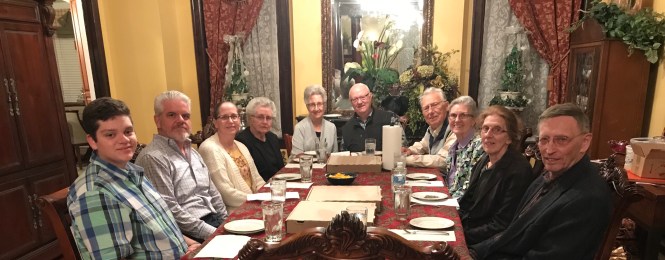 From left: Austin Christman, Susan’s grandson; Michael Christman, Susan’s son-in-law; Lisa Mustread, Wally’s daughter; Susan; Daniel Segraves, Susan’s husband; Jimmy Soberg, Mary Ruth’s husband; Mary Ruth; Rosalie; Willis Thoen, Rosalie’s husband; Becky Christman, Susan’s daughter, took the picture.


