Does Psalm 89 include an internal contradiction?

October 22, 2024 | Daniel L. Segraves, Ph.D.

At last, I have finished my work with Psalm 89, the final psalm in Book 3 of the Psalter. Book 3 consists of Psalms 73-89. Early this morning I began work on Psalm 90, “A Prayer of Moses the man of God.” Since this is a prayer of Moses, it is apparently the oldest psalm included in the Psalter. It is, of course, the first psalm in Book 4, which extends through Psalm 106.

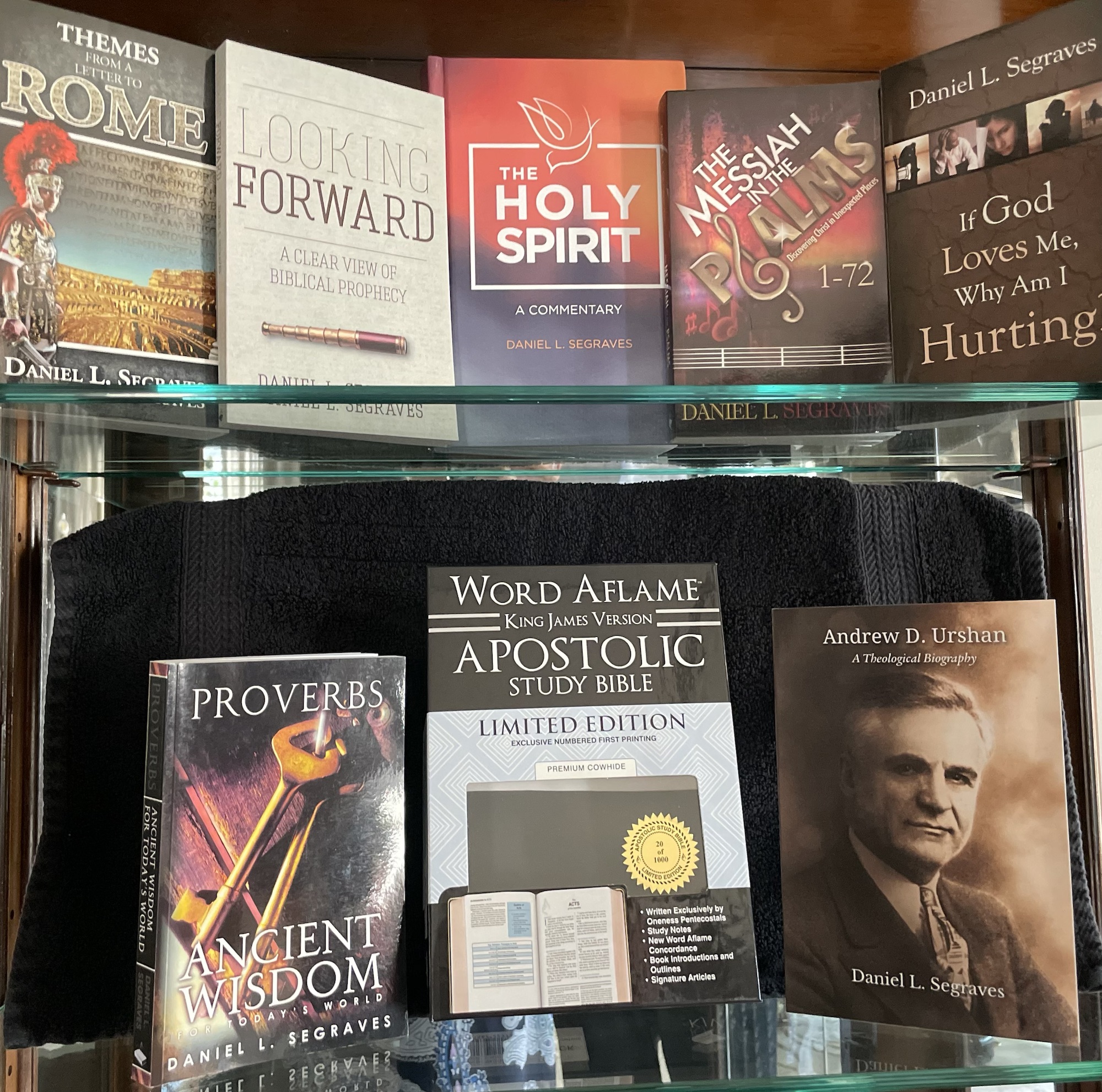
As I have mentioned before, my plan is to finish Psalm 106 by the end of this year and to submit it to the editor in hopes of publication before the 2025 general conference of the United Pentecostal Church International.

Now, what’s this about a possible contradiction in Psalm 89? When I post my progress in this project, I often include a snippet of what I have written on each psalm and remind you that my complete work will be included in the published book. I’m not going to do that here. Instead, I will include four verses from Psalm 89 in this post and let you think about their significance as it relates to my question. Here they are:

“I have made a covenant with my chosen, I have sworn unto David my servant, thy seed will I estabish for ever, and build up thy throne to all generations. Selah” (Psalm 89:3-4).

“Thou hast made void the covenant of thy servant: thou hast profaned his crown by casting it to the ground. …Thou hast made his glory to cease, and cast his throne down to the ground” (Psalm 89:39, 44).

Think it over!

[archive]

Psalm 88 … Is There Any Hope?

October 3, 2024 | Daniel L. Segraves, Ph.D.

Tonight, after Susan and I finished viewing the powerful General Conference message delivered by David Bernard, the General Superintendent of the United Pentecostal Church International, I concluded my work on Psalm 88.

This psalm, a personal lament of Heman, a singer and musician appointed by King David, is challenging because of its persistent sense of hopelessness. The themes of the psalm include crying, troubles, thoughts of death, weakness, darkness, wrath, afflictions, isolation, mourning and more.

As I seek to complete my work on Books 3 and 4 of the Psalter, I pray God will help me understand how the Scriptures testify of Jesus, the Messiah. I am thankful to have discovered that there is good news, even in this Psalm of lament.

Tomorrow, I plan to begin my work on Psalm 89.

[archive]

Is Psalm 87 a Pentecostal psalm?

September 13, 2024 | Daniel L. Segraves, Ph.D.

I am happy to report that I have finished my work on Psalm 87! As with my study of Psalm 86, I was once again delighted to discover new insights. In this case, my convinction was strengthened that Psalm 86:9-10 provides a profound link to Psalm 87:4-6 and points ahead to Acts 2.

I can’t describe the results of my study in this post. They will be included in the second volume of my commentary titled The Messiah in the Psalms: Discovering Christ in Unexpected Places. The first volume is available both in hard copy and ebook formats at pentecostalpublishing.com and amazon.com. My goal is to finish this second volume, which will include Psalms 73-106 and submit it to the editor by the end of this year.

Here is a paragraph from my comments on Psalm 87. As you read it, keep in mind that people from Egypt were included among those who gathered in Jerusalem on the Day of Pentecost. (See Acts 2:9-10.)

Psalm 86:9 suggests a link between Psalm 86 and Psalm 87 and perhaps even a prophetic connection between these psalms and the events of the Day of Pentecost as recorded in Acts 2. This idea begins as follows: “All nations whom thou hast made shall come and worship before thee, O Lord; and shall glorify thy name” (Psalm 86:9). The nations mentioned in Psalm 87 include “Rahab,” an “emblematic name of Egypt,”[1] Bratcher and Reyburn explain that Egypt “translates Rahab, a poetic name for the country (see Isa 30:7).”[2] This can be seen in the Hebrew text of Isaiah 30:7, where the helpless Egyptians are identified as “Their strength is to sit still” (KJV). The NKJV renders the final three words in this verse “Rahab-Hem-Shebeth.” The Hebrew text here transliterates as rahab hēm šābet [רַ֥הַב הֵ֖ם שָֽׁבֶת]. In this context, the reason Rahab is used to represent Egypt is to call attention to Egypt’s history of arrogance and violence. Psalm 87, however, anticipates an event that will transform the nations mentioned in verse 4, an event that will be characterized by these nations coming to worship the Lord and glorify His name (Psalm 86:9). This will be connected with these nations coming to understand that the Lord alone is God (Psalm 86:10).


[1] Richard Whitaker et al., The Abridged Brown-Driver-Briggs Hebrew-English Lexicon of the Old Testament: From A Hebrew and English Lexicon of the Old Testament by Francis Brown, S.R. Driver and Charles Briggs, Based on the Lexicon of Wilhelm Gesenius (Boston; New York: Houghton, Mifflin and Company, 1906).

[2] Robert G. Bratcher and William David Reyburn, A Translator’s Handbook on the Book of Psalms, UBS Handbook Series (New York: United Bible Societies, 1991), 759.

Now, to Psalm 88!

[archive]

Now, on to Psalm 87

September 8, 2024 | Daniel L. Segraves, Ph.D.

Six days ago, on September 3, 2024, I announced the completion of my work on Psalm 85. Now, I am pleased to say my research and comments on Psalm 86 were finished yesterday, and I have begun work on Psalm 87. [Please understand the word “finished” in this endeavor must be defined to allow for revisions or editorial work at some future point!]

I enjoyed studying Psalm 86. I frequently ask our Lord in prayer to help me rightly interpret the Scriptures and to understand how they testify of Him (Luke 24:44). I genuinely believe He opened my eyes to messianic themes I had not seen before in this psalm. I will share a bit of that with you in this post.

But first, I want to express my appreciation to my wife, Susan, for her work in redesigning the masthead of my blog. She has a great sense of design and works hard to get everything just right. Thank you, Susan!

Now, here are some of my comments on Psalm 86:16:

Psalm 86:16 indicates there is a son of someone who is the handmaid of the Lord, but the verse does not identify this son’s father. There is a clue to his identity, however, within the verse and in Psalm 89:26: “He shall cry unto me, Thou art my father, my God ….” If the person whose prayer is recorded in Psalm 86 is the same as the one whose prayer is found in Psalm 89:26, we know that the “son” of Psalm 86:16 is the Messiah, Jesus Christ.

Who, then, is His mother, the handmaid of the Lord? After her encounter with the angel Gabriel, who announced to Mary, “And, behold, thou shalt conceive in thy womb, and bring forth a son, and shalt call his name JESUS,” Mary responded with these words: “Behold the handmaid of the Lord: be it unto me according to thy word” (Luke 1:31, 38). After her visit with Elisabeth, Mary said, “My soul doth magnify the Lord, and my spirit hath rejoiced in God my Saviour. For he hath regarded the low estate of his handmaiden: for, behold, from henceforth all generations shall call me blessed” (Luke 1:46-48).

[Archive]

Presentation at the Urshan Graduate School of Theology Symposium

April 5, 2024 | Daniel L. Segraves, Ph.D.

On February 16, 2024, I presented a paper titled “Aramaic Influences on Messianic Psalms 80-81” at the UGST Symposium. This paper was part of my research for the second volume of my commentary on the Book of Psalms. The first volume is titled The Messiah in the Psalms: Discovering Christ in Unexpected Places. It covers Psalms 1-72. The second volume will cover Psalms 73-106. It will be my twenty-second book. All my books as well as digital resources are available at pentecostalpublishing.com. The books are also available at amazon.com.

[archive]

Learning Biblical Aramaic

January 8, 2024 | Daniel L. Segraves, PhD

Today I began a formal study of the Aramaic language as it is used in Scripture. As I have worked on the second volume of my commentary on the Book of Psalms, it has become clear to me that it is necessary for me to achieve a working knowledge of Aramaic in order to accomplish this task.

Aramaic is found in a variety of places in the Old Testament, with a substantial portion of Daniel and Ezra originally written in the language. Small portions of other Old Testament texts include Aramaic. Jesus spoke Aramaic, the common conversational language of Israel in the first century, and the language is also discovered in a variety of New Testament writings.

In addition, the Aramaic Targums, paraphrases of the Hebrew Scriptures which were read in first century synagogues to help the people understand the meaning of the texts, can give us insight today into how the early Christian believers understood the Messianic content of the Old Testament. For instance, I will present a paper at the upcoming symposium sponsored by Urshan Graduate School of Theology titled, “Aramaic and LXX Influences on Messianic Psalms 80 and 81.” This symposium will convene on the campus of UGST on February 15-16, 2024.

The course of study I have undertaken is available from Zondervan Academic Online Courses. The professor who teaches the course is Miles V. Van Pelt. Van Pelt earned his Ph.D. at the Southern Baptist Theological Seminary and is the Alan Hayes Belcher, Jr. Professor of Old Testament and Biblical Languages and the director of the Summer Institute for Biblical Languages at Reformed Theological Seminary in Jackson, Mississippi, where he has served for more than twenty years. The course materials include a textbook written by Van Pelt and published by Zondervan Academic, titled Basics of Biblical Aramaic: Complete Grammar, Lexicon, and Annotated Text. This book is now in its second edition. Van Pelt has studied the biblical languages for more than thirty years.

The course lectures are delivered by video. I have found them to be professionally produced. Van Pelt is an expert in his field. His presentations are clear and easy to follow.

At the beginning of the course, students are informed that they will need to have completed at least one year of Biblical Hebrew before embarking on the study of Aramaic. The two languages share the same alphabet and a variety of other linguistic characteristics. Those who have successfully completed the Hebrew will have a good foundation for the study of Aramaic, but if their Hebrew is “rusty,” they will need to take the time to overcome that deficit. The Aramaic course is designed to be completed within one year.

As I begin what I know will be a challenge, I am grateful for the way our Lord has directed my steps up until this time. When five of our professors at Christian Life College enrolled as students in Western Seminary in 1990 to fulfill the requirements to maintain the state approval of the school, four of us enrolled in Hebrew and completed three semesters of the language. At the same time, I arranged for the director of education at a local Jewish synagogue to come to our campus weekly and tutor us in the Hebrew language. This was a great help to us. After graduating from Western with my first master’s degree — the Master of Arts in Exegetical Theology — I took advantage of Western’s policy of allowing graduates to return to the classroom to sit in on classes they had already taken and successfully passed for refreshment in the course content. This second exposure to Hebrew was with a professor who had lived in Israel for twenty years and who was a professional archaeologist.

As time went by, I taught Biblical Hebrew at Christian Life College. In view of the importance of having a solid foundation in Hebrew in order to begin the study of Aramaic, I’m thankful for how God has directed my steps to this moment.

[archive]