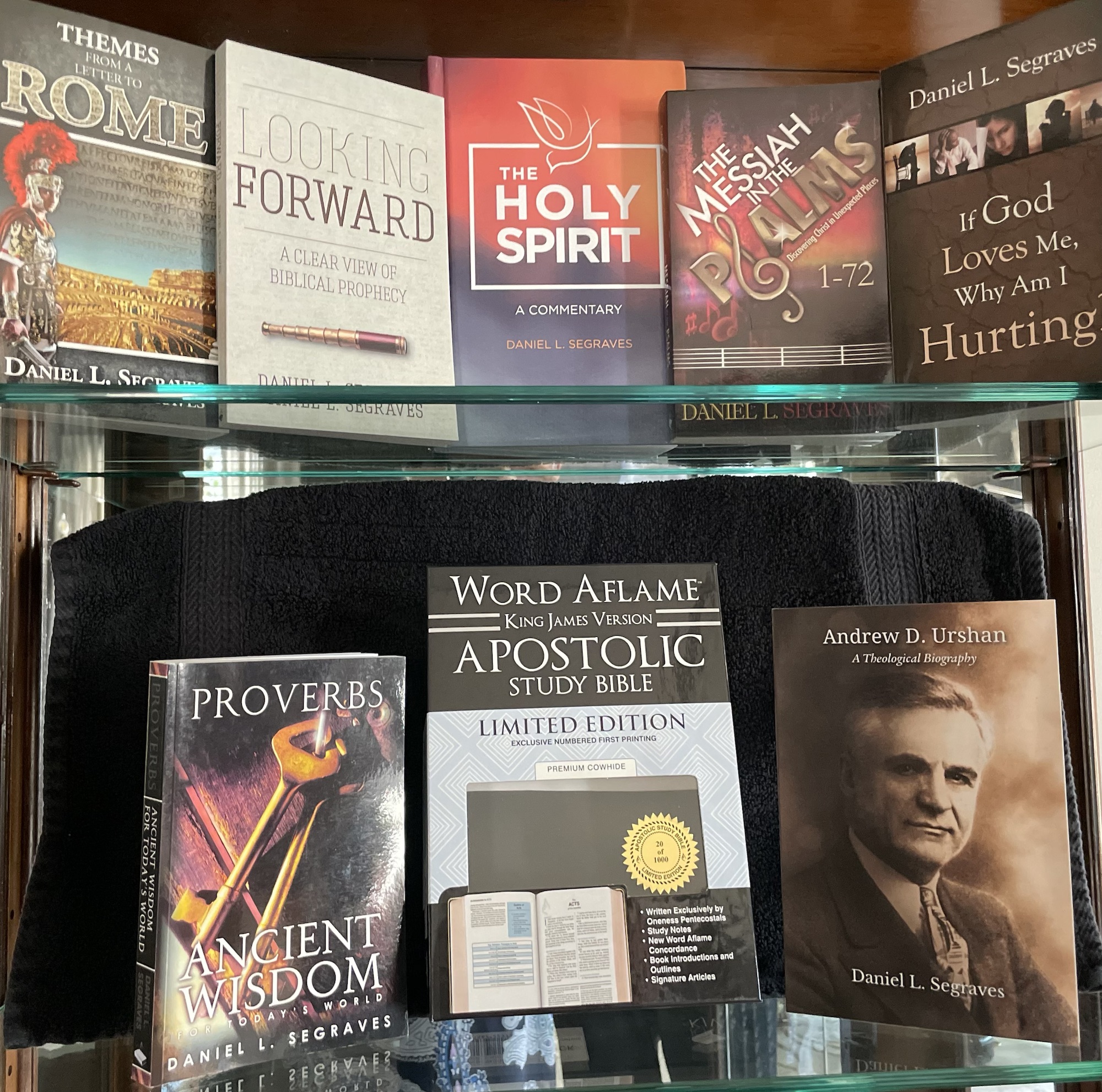
The first purchase for our new home.

February 18, 2025 | Daniel L. Segraves, Ph.D.

Eleven years ago today, Susan and I made the first purchase for our new home.

We married on September 28, 2013 and lived for six months in a two bedroom suite at the Residence Inn by Marriott in Earth City, Missouri while our home was being built. We moved in to our new home on April 23, 2014.

What a day that was! At the beginning of the day we had no grass. Not a blade. But throughout the day thirteen men were on site, laying sod, carrying our furniture in from the Bekins truck parked out front, and two men were hanging wallpaper in different rooms.

As I passed by one of the paperhangers, I heard him say on his cellphone, “This place is a madhouse!”

But by the end of the day we had a full, lush lawn, front and back. All the furniture was in the house. All the paper was hung.

We were home.

About one month after our marriage, Susan and I visited a local Lacefield Music Store. There we viewed the beautiful Kawai pianos on display. On such occasions I always enjoy experimenting with the pianos. We really did not plan to buy one that day, but the store manager assured us we could still purchase a K. Kawai for the Black Friday price even though we were past that day. We took the bait, but we could not take delivery until our house was built.

In the meantime, Lacefield had a top of the line Shigeru Kawai on display. I took advantage of playing this astounding concert grand while we were in the store. If you wish, you can view the video below.

Two days after we moved in, two men arrived with our new K. Kawai, seen below. I have enjoyed playing this piano now for eleven years. It is less than ten feet from the desk where I spend a lot of time doing research and writing my new books.

Susan and I are so grateful to God for His lovingkindness. He brought us together, He has met all our needs, and His presence dwells in the home He has given us.

[archive]

Good News!

February 5, 2025 | Daniel L. Segraves, Ph.D.

I am so happy to report that at 3:43 PM today I received an email from Everett Gossard, Book Editor for the Pentecostal Resources Group informing me that my manuscript for the second volume of The Messiah in the Psalms: Discovering Christ in Unexpected Places has been accepted for publication.

By 4:56 PM I had the contract signed, scanned, and emailed.

I’m thankful for Brother Gossard’s guidance in this project, and I’m already at work on volume 3, which will consist of Book 5 of the Psalter. This consists of Psalms 107-150.

Right away, I have noticed that in this section of the Book of Psalms the Aramaic Targums are replete with the use of Memra, as are Books 3 and 4. The word Memra appears 35 times between Psalm 107 and Psalm 148. My interest is in how Memra is used in the Targums as a kind of interpretative paraphrase for Yahweh, usually rendered LORD in English translations.

I am especially interested to note the use of Memra in Psalm 110:1. This is a significant verse for Christology. It is quoted, paraphrased, or alluded to in the New Testament more than any other Old Testament verse. It is, in fact, the last full verse of the Old Testament quoted by Peter before Acts 2:38, playing a significant role in convicting them and prompting them to ask, “Men and brethren, what shall we do?”

Indeed, the word “Memra” appears in the Targum of Psalm 110:1, giving us guidance to grasp how first century believers may have understood this verse.

When Jesus asked the Pharisees, “What do you think about the Christ? Whose Son is He?” they answered, “The Son of David.” Jesus responded, “How then does David in the Spirit call Him ‘Lord,’ saying, ‘The LORD said to my Lord, “Sit at My right hand, Till I make Your enemies Your footstool” ‘? “If David then calls Him ‘Lord,’ how is He his son?”

The Pharisees were unable to answer a word. From that day, no one dared question Jesus. (See Matthew 22:41-46.)

I will keep you updated on my progress as I work toward Psalm 150.

[archive]

All done!

January 18, 2025 | Daniel L. Segraves, Ph.D.

This past Thursday night, January 16, I finished my work on the second volume of my commentary titled The Messiah in the Psalms: Discovering Christ in Unexpected Places. On the same evening, I submitted the 227-page manuscript to Everett Gossard, the book editor for Pentecostal Resources Group.

At a meeting on November 5, 2024, the PRG Executive Publications Committee discussed the earlier form of this work, which consisted of my comments on Psalms 73-89, Book Three of the Psalter. The committee members considered the manuscript provisionally approved, contingent on their review of the complete manuscript. The committee will meet next on March 12 to decide on the entire work, now including my commentary on Psalms 73-106. Psalms 90-106 constitute Book Four.

If all goes well, I am hoping for publication before the 2025 general conference of the United Pentecostal Church International in St. Louis, Missouri.

Now, on to Psalm 107!

[archive]

Almost there ….

January 10, 2025 | Daniel L. Segraves, Ph.D.

I am happy to report that I have finished my work on Psalms 73-104. Now I am working on Psalm 105, which I may be able to complete over this weekend. If so, I will lack only Psalm 106 to be ready to send the manuscript for the second volume of my commentary to the editor.

Those who have followed my journey on this project know it has been off and on the back burner since 2018. This has never been because of a lack of interest on my part. I am intrigued by the Psalter, and I rejoice over every discovery I have made. It has truly been an experience of discovery. That’s why all three volumes of this work (yes, there will be a third and final volume covering Psalms 107-150) are titled The Messiah in the Psalms: Discovering Christ in Unexpected Places.

When the project has been on the back burner, it has been due largely to my involvement in other writing projects like my commentary on the Holy Spirit. This hardback book exceeds 300 pages and deals with nearly every reference to the Holy Spirit from Genesis 1 to Revelation 22.

I am so grateful for my wife Susan! She has supported and encouraged me throughout this experience, sharing my joy of discovery when I found never before seen insights.

Now, back to work!

[archive]

A New Year and a New Era for Logos Bible Software

January 1, 2025 | Daniel L. Segraves, Ph.D.

In this, my first post on the first day of the new year, I would like to let you know about the latest developments in my favorite research resource, Logos Bible Software.

From time to time, I am asked what I think is the most helpful Bible software available.

My opinion is based on many years of use in the context of teaching on the Bible college and seminary levels as well as research and writing to fulfill the requirements for the degrees M.A. in Exegetical Theology, Master of Theology, and Ph.D. in Renewal Studies with majors in Christian Theology and History of Global Christianity.

In addition to using Bible software in preparation for teaching in classrooms, local churches, camp meetings, and other venues like Purpose Institute, I find it helpful in fulfilling writing assignments for the Pentecostal Life magazine, “God’s Word for Life,” the curriculum published by the United Pentecostal Church International, and a variety of other ministry opportunities that require writing. I have written twenty-one books and hope to have finished the twenty-second in just a few days.

So what Bible software do I recommend?

Without question, it is Logos Bible Software.

I regularly sit through training sessions to keep up to date on the latest developments in this amazing technology. To take a look for yourself at its current state, you can go to https://www.logos.com. You will discover “The World’s Most Powerful Bible Study Platform.” A “Start Free Trial” is available if you like what you see. If you wish, you can talk to a Logos expert by calling 888-398-9481.

If you’ve ever looked at Logos, you probably have some idea about its capabilities. Today’s Logos does all it has ever done but, in an often-used term, it takes Bible research and writing to “a whole new level.”

I subscribe to Logos MAX. With its thousands of books, journal articles, dictionaries, encyclopedias, and original language resources (Hebrew, Greek, Aramaic) available in a moment, I can find what I need to move quickly to complete projects.

The integration of AI enables me to ask questions and receive almost instant feedback based on the resources in my subscription. The responses free me from any concern about the accuracy of my findings because they do not come from the internet at large but from the trusted resources I have selected.

With the New Era of Logos, you will discover tools and resources to supercharge your personal study, teaching and preaching preparation, and academic research. I encourage you to look into this.

I wouldn’t want to be without it!

[archive]

Marching on …

December 20, 2024 | Daniel L. Segraves, Ph.D.

At about midnight last night I finished my work on Psalms 93-99. These psalms form a unit focusing on the reign of the LORD. They are well-connected with the creation account in Genesis and with the New Testament by several quotations and allusions, including an extended quotation that clearly testifies to the deity of the Messiah, Jesus. By means of this quotation, Jesus is identified as Yahweh.

Now, on to Psalm 100. One of the first things I did today was to read through Psalms 100-106. When I am finished writing the commentary on these psalms, I will submit the entire document to Everett Gossard, the book editor for Pentecostal Resources Group. This manuscript will cover Psalms 73-106, Books 3 and 4 of the Psalter. It will exceed 200 pages.

I appreciate those who are praying for me as I finish this project. One of the last things Jesus told His disciples before His ascension was that everything written in the law of Moses, and in the prophets, and in the psalms concerning Him must be fulfilled (Luke 24:44). I pray that our Lord will help me identify those things written about Him in the Book of Psalms. So far, I have discovered that much of the messianic content of this book is connected with other messianic insights from the law and the prophets as well as fulfillment motifs in the New Testament.

This has been an exciting and rewarding journey, but it will not be complete until I write my comments on Psalm 150:6.

[archive]

Psalm 92 and Old Age

December 14, 2024 | Daniel L. Segraves, Ph.D.

I have completed my work on Psalm 92. Now I am doing research on Psalms 93-99, a collection that focuses on the reign of the LORD. My hope is increasing that I will be able to complete this second volume of my commentary on Psalms by the end of January 2025. It will include Psalms 73-106. I don’t plan, however, to take a long, leisurely break after that. Instead, I intend to press on toward the completion of volume 3 of The Messiah in the Psalms: Discovering Christ in Unexpected Places. This final volume will consist of Psalms 107-150.

Since I am now 78 years old, I especially enjoyed the next to last verse of Psalm 92. It reads: “They shall still bear fruit in old age; They shall be fresh and flourishing” (NKJV).

[archive]

Here’s what has happened in recent weeks.

November 26, 2024 | Daniel L. Segraves, Ph.D.

About four weeks ago, I submitted the manuscript for my commentary on Psalms 73-89 to Everett Gossard, the book editor for the Pentecostal Resources Group, UPCI. On November 6, the Executive Publication Committee met and discussed the possibility of publishing the second volume of The Messiah in the Psalms: Discovering Christ in Unexpected Places. The committee provisionally approved the manuscript, contingent on their review of the entire manuscript once it is finished.

This volume will consist of my research and commentary on Psalms 73-106, Books 3 and 4 of the five books within the Psalter. The third volume will cover Psalms 107-150, the fifth and final book within the Book of Psalms.

Since submitting the manuscript, I have finished my work on Psalms 90 and 91. It has been my goal to complete all the psalms through Psalm 106 by the end of this year. I’m realizing this may not be possible. If not, I have prayed to be able reach this goal by the end of January in hopes of getting this second volume published by the time of the 2025 general conference of the United Pentecostal Church International in St. Louis, my home town.

I deeply appreciate the opportunity to participate in the writing ministry. I love the Book of Psalms and pray that God would give me the ability to rightly divide the word of truth and to understand how the Scriptures speak of Him.

[archive]

Somewhere …

November 2, 2024 | Daniel L. Segraves, Ph.D.

This is not my typical post, but this video came up today as my iPhone reminded me of some recordings I made a while back. I’m unsure of all the lyrics, but there is a Christian version if you want to look them up!

On another subject, since I usually have something to say about my Psalms project, I’m happy to announce that yesterday I submitted my commentary on Book 3 of the Psalter (Psalms 73-89) to the editor!

[archive]

A glance toward the future from a very old psalm: Psalm 90

October 26, 2024 | Daniel L. Segraves, Ph.D.

At about 12:15 this morning, I finished my work on Psalm 90, the first psalm in Book 4 of the Psalter. I had told my wife Susan that I thought I could finish it yesterday, and I almost made it.

The superscription of Psalm 90 informs us it is “A Prayer of Moses the man of God.” It is the only psalm written by Moses, which makes it the oldest in the Book of Psalms. We can’t be sure when it was written, but we can be certain he wrote it before he died! Since I wasn’t able to come up with anything that resembled a close date, I consulted Logos Bible Software’s new AI feature, which assured me that Moses wrote it “by the year 1440 BC.” I’ll go with that.

Since I’m living in 2024, that means Moses wrote the psalm somewhere around 3,464 years ago. That’s why I say it is “a very old psalm.”

When I study the psalms, I always keep in mind that Jesus, just before His ascension, told His disciples, “These are the words which I spoke to you while I was still with you, that all things must be fulfilled which were written in the Law of Moses and the Prophets and the Psalms concerning Me” (Luke 24:44, NKJV). He told the Jewish leaders who did not believe on Him, “There is one who accuses you–Moses, in whom you trust. For if you believed Moses, you would believe Me; for he wrote about Me. But if you do not believe his writings, how will you believe My words?” (John 5:45-47, NKJV).

I discovered some interesting things in Psalm 90 that point toward the future. Here’s a hint: They involve servants and children. See if you can figure this out. I’ll tell you what I think in the second volume of my commentary, The Messiah in the Psalms. I hope to finish this up and submit it to the editor by the end of this year. I would be happy to see it published before the 2025 general conference of the United Pentecostal Church International, which will convene in St. Louis, Missouri, my home town!

Now, on to Psalm 91, the psalm from which Satan quoted in his attempt to convince Jesus to throw Himself down from the pinnacle of the temple.

[archive]