Uncategorized
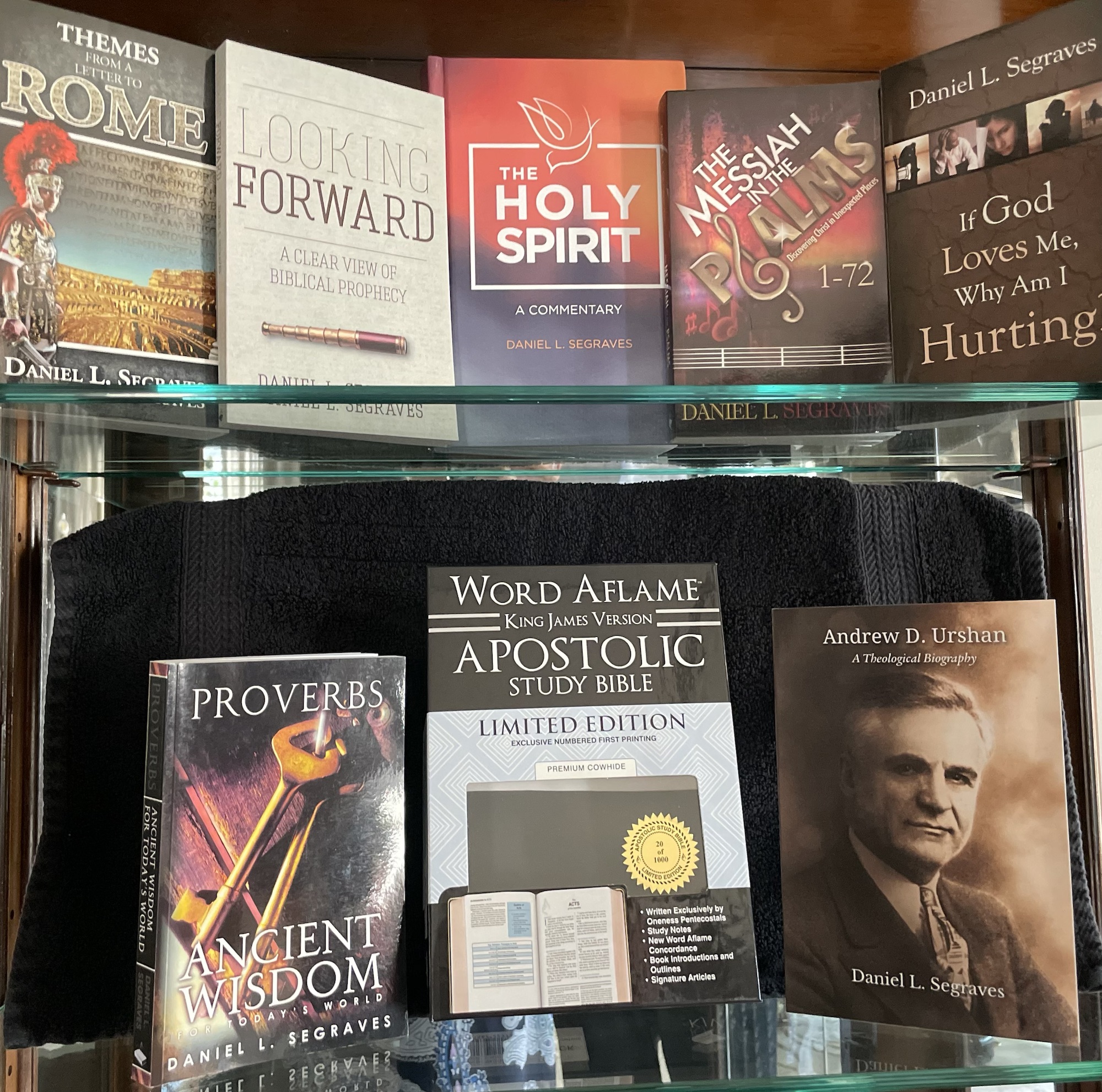
Discovering Christ in Unexpected Places, Lesson 1
Lesson 1 | September 4, 2016
Prepared by Daniel L. Segraves, PhD
Introduction
The Psalms have been widely used as devotional literature, giving comfort and hope to those who are in difficult circumstances. Many people have favorite psalms they love to quote or to meditate on, like Psalm 1, 8, 23, or 91. The beautiful words and well-timed cadences of the Psalter sooth troubled hearts. They assure us that we are walking on a path others have trod before us and that, if we trust in our Lord, there is the promise of a better day.
But there is something in the Psalms that goes far beyond this. According to Jesus, Peter, Paul, and the consistent use of the psalms by the New Testament church, the Psalter is first and foremost a book about the Messiah. This doesn’t mean only that there are a few “messianic” psalms scattered throughout the book. The entire Psalter, from beginning to end, testifies of the Messiah. When read as a messianic book, Psalms takes on a dynamic dimension beyond that of devotional literature. It is no longer a section of the Bible that we turn to only when we are searching for encouragement or wisdom; it is a book we turn to in order to know Jesus better. This does not eliminate its devotional value; it enhances it. Now we see that the one with whom we identify in suffering and victory is not just David or other human authors; it is our Lord Jesus Christ.
For many years the first century church existed without a New Testament. Until the first New Testament book was written, which was at least about fifteen years after the church was founded on the Day of Pentecost, the only Bible Christians had was the Old Testament. From the time that the books that now make up our New Testament began to be written, it was almost another half century before the last book was completed. How could the New Testament church exist without a New Testament? This was possible because the gospel message is deeply rooted in the Hebrew Scriptures. The first apostles found everything they preached in the Old Testament.
During His final days on earth, Jesus explained to His disciples everything in the Old Testament that concerned Him. (See Luke 24:27.) He said, “[A]ll things must be fulfilled which were written in the Law of Moses and the Prophets and the Psalms concerning Me” (Luke 24:44). By explaining the Christ-centered content of the Old Testament, Jesus “opened their understanding, that they might comprehend the Scriptures” (Luke 24:45). He taught them, from the only inspired Scripture that existed at that time, about the sufferings of the Messiah, His resurrection on the third day, “and that repentance and remission of sins should be preached in His name to all nations, beginning at Jerusalem” (Luke 24:46-47).
On the Day of Pentecost, Peter’s Bible was the Old Testament. He quoted extensively from Joel and Psalms to explain the events of that day. Twelve verses of Peter’s Pentecostal message were either direct quotes from Psalms or explanations and applications of those quotes. It was Peter’s use of Psalms that led his hearers to ask, “Men and brethren, what shall we do?” (Acts 2:37).
To read the Book of Acts is to recognize the fundamental place of the Old Testament Scriptures in the mission and message of the first century church. For example, to explain his message and ministry that led to the healing of the man at the Beautiful Gate, Peter said, “Yes, and all the prophets, from Samuel and those who follow, as many as have spoken, have also foretold these days” (Acts 3:24). Since Peter had already identified David as a prophet (see Acts 2:30), this means that Peter believed David foretold the events that were occurring in the life of the early church. This understanding was not limited to the apostles. The church at large understood that the Book of Psalms foretold the treatment of Jesus by Herod, Pontius Pilate, and the Romans. (See Acts 4:24-28.)
Paul declared that what he believed was that which was written in the Law and the Prophets (Acts 24:14). He had done nothing offensive against the law of the Jews or the temple (Acts 25:8). He was called before Agrippa “for the hope of the promise made by God to [the] fathers” (Acts 26:6). In a very clear appeal to the Hebrew Scriptures for his message, including the inclusion of Gentiles equally with the Jews, Paul told Agrippa that he said nothing other than those things “which the prophets and Moses said would come—that the Christ would suffer, that He would be the first to rise from the dead, and would proclaim light to the Jewish people and to the Gentiles” (Acts 26:22-23). Rather than claiming innovation for his message, Paul insisted that he said nothing new. After arriving in Rome, Paul told the Jewish community there that he had done nothing against the Jewish people or the fathers (Acts 28:17). Instead, he was bound “for the hope of Israel” (Acts 28:20). He “explained and solemnly testified of the kingdom of God, persuading them concerning Jesus from both the Law of Moses and the Prophets” (Acts 28:23).
The New Testament quotes from, alludes to, or paraphrases the Old Testament in nearly 800 verses. The book most frequently appealed to is Psalms, which is referred to 206 times in the New Testament. Psalm 110:1 is the verse most frequently referred to out of the entire Old Testament; it is quoted, alluded to, or paraphrased twenty times in the New Testament. Jesus Himself quoted Psalm 110:1, confounding the Pharisees. (See Matthew 22:43-44.)
In the Book of Psalms, we discover that Christ, the promised Messiah, is the Son of God. He is, at the same time, the Son of Man and, specifically, the Son of David. The fact that He is the Son of God does not mean that He is in any way less than God. The Messiah is God Himself in human existence. The psalms foretell the Messiah’s birth, important events in His life—including things not found in the New Testament, His betrayal, His sufferings, His death, His resurrection, His ascension, His Second Coming, and the Millennium. The Psalter foretells the proclamation of the gospel, the Messiah’s bride, and the gifts given to the New Testament church upon His ascension.
When our eyes are opened to the primary focus of the Book of Psalms, we begin to understand why this book was such a major part of the preaching of the first century believers. And we come to know that through the reading of the Psalter, we will “grow in the grace and knowledge of our Lord and Savior Jesus Christ” (II Peter 3:18).[1]
The videos and study guides for this class can be accessed at http://www.danielsegraves.com/blog.
[1] This introduction is from Daniel L. Segraves, The Messiah in the Psalms (Hazelwood, MO: WAP Academic, 2007), 9-12.
Proverbs Lesson 11 video
Proverbs Lesson 10 Video
Proverbs Lesson 11
Proverbs
Ancient Wisdom for Today’s World
Lesson 11 | August 21, 2016
Prepared by Daniel L. Segraves, PhD
Another Numerical Saying
In our previous lesson, we saw a variety of proverbial forms. This included instructions, admonitions, numerical sayings, “better than” sayings, comparative sayings, abomination sayings, beatitudes, Yahweh sayings, and contrary proverbs.
We examined one of the numerical sayings found in Proverbs 6:16-19. In this lesson, we will look at a proverbial numerical saying found in Proverbs 30:7-9.
Falsehood, Lies, Poverty, and Riches
Two things I request of You (Deprive me not before I die): Remove falsehood and lies far from me; Give me neither poverty nor riches – Feed me with the food allotted to me; Lest I be full and deny You, and say, “Who is the Lord?” Or lest I be poor and steal, and profane the name of my God (Prov 30:7-9).
At first glance, the title of the subheading above may seem to emphasize negative things (falsehood, lies, poverty) and minimize positive things (riches). A closer reading of the context shows, however, that all four items – including riches – are seen in a negative light. Agur does not want any of them.
Agur’s wish to be delivered from falsehood and lies is clarified by the immediate context of these verses. Proverbs 30:5-6 reveals that God’s words are pure (i.e., true) and that those who add to them are liars. Thus, Agur does not want to be involved in anything other than or in addition to God’s words.
A bit earlier in the context, in what appears to be an ironic response to a claim by Ithiel and Ucal that Agur[1] lacked wisdom, he said:
Surely I am more stupid than any man, and do not have the understanding of a man. I neither learned wisdom nor have knowledge of the Holy One (Proverbs 30:2-3).
In this case, as a kind of continued reflection on this accusation, Solomon prays to be removed from falsehood and lies or, in other words, from stupidity and from a lack of understanding, wisdom, and knowledge of God. Another way of saying this is that Solomon prayed for understanding, for wisdom, and to know God. These qualities would remove him from falsehood and lies.
Agur prayed also that he would be neither rich nor poor, but that he could live simply, with his basic needs met. The reason for this request is clear: Riches bring unnecessary temptation to trust in wealth and so to forget God. This danger is also described in the New Testament.
The Rich Young Ruler
An encounter between Jesus and a rich young man illustrates the danger of trusting wealth rather than following Jesus. When we consider all three accounts of this story, significant points emerge.[2]
- As a “ruler,” he may have been a member of the Sanhedrin.[3]
- He thought it was possible to earn eternal life by doing good things.
- He claimed to have kept the commandments Jesus mentioned from his youth.
- When confronted with the invitation to follow Jesus, he rejected the opportunity.
It is not possible to gain eternal life by keeping the law of Moses.[4] Why, then, did Jesus respond to the young man’s questions by referring to commands from the law? First, notice that although the young man had asked about eternal life, Jesus did not say one could enter into eternal life by keeping the commandments. He simply said one could enter into life by doing so.[5] The Law of Moses offered no promise of eternal life. There are promises of life in the Law of Moses, but they refer only to long life in the Promised Land. Paul points out that the first of the Ten Commandments with promise is the command to honor one’s parents, and the promise is only for long life on the earth (Ephesians 6:1-3).
Apparently the young man had not kept all the commandments perfectly, for Jesus said he lacked one thing that could have been fulfilled by selling what he had and giving the proceeds to the poor. The young man’s unwillingness to do this indicates that he did not love his neighbor as himself. But even if the young man had been willing to do this, there was still one more thing he would have had to do to enter into eternal life. He would have had to obey Jesus’ invitation: “Come, follow Me.” In other words, even if he had perfectly kept all of the commandments in the Law of Moses – all 613 of them – he still would not have eternal life if he refused to follow Jesus.
The young man’s response to Jesus revealed that he trusted his riches (Mark 10:24). He was unwilling to release his trust in riches and to trust instead in Jesus.
Jesus’ disciples were astonished when Jesus said, “It is easier for a camel to go through the eye of a needle than for a rich man to enter the kingdom of God” (Mark 10:25-26). The reason for their astonishment is that the Law of Moses promised wealth to those who kept all of the commandments. For this reason, first century Jews thought wealth was a sign of God’s blessing for perfect obedience. (See Deuteronomy 8:18.)
Jesus did not say, however, that it was impossible for a rich person to be saved. He said it was hard. In response to the question, “Who then can be saved” (Mark 10:26), Jesus said, “With men it is impossible, but not with God; for with God all things are possible” (Mark 10:27). Even though it is difficult for the rich to do so, if they will give up their trust in wealth and follow Jesus, they can be saved.
Another Warning about Riches
Paul warned Timothy, a young pastor, about the dangerous desire to be rich. (See I Timothy 6:6-11.) Texts like these underscore the validity and importance of a prayer like that found in Proverbs 30:7-9. Although those who are poor may be tempted to steal, those who are rich may be tempted to deny the Lord out of a false sense of self-sufficiency and trust in riches.
Not all who are poor will steal. Neither will all who are rich deny the Lord. But it is wise to be willing to ask God to do whatever needs to be done in one’s life to avoid attitudes or behavior that would endanger one’s relationship with Him.
[1] It has been suggested that the names Agur, Jakeh, Ithiel, and Ucal may refer to Solomon, David, and two of Solomon’s sons. Agur may mean “collector of wise sayings.” Jakeh means “the obedient one.” Ithiel means “God is with me.” Ucal means “I shall be completed.” (See Daniel L. Segraves, Ancient Wisdom for Today’s World [Hazelwood, MO: Word Aflame Press, 1990], 299.)
[2] See Matthew 19:16-29; Mark 10:17-30; Luke 18:18-30.
[3] The Sanhedrin was a Jewish council responsible for final decisions in legal disputes. See Arthur G. Patzia and Anthony J. Petrotta, Pocket Dictionary of Biblical Studies (Downers Grove, IL: IVP Academic, 2002), 103.
[4] See, for example, Acts 13:39; Romans 3:28; Galatians 2:11, 16; 5:4.
[5] Matthew 19:17;
Proverbs Lesson 10
Proverbs
Ancient Wisdom for Today’s World
Lesson 10 | August 14, 2016
Prepared by Daniel L. Segraves, PhD
Some Proverbial Forms
Not all proverbs are created equal. What we mean is that proverbs appear in various forms. The following list includes some, but not all, of these forms with examples.
- Instructions: “Listen, my son” (Prov 1-9; 22-24).
- Admonitions: “Guard your heart, for it is …” (Prov 4:23).
- Numerical Sayings: “Three things are too amazing … four that I …” (Prov 30:18).
- “Better than” Sayings: “Better poor … than rich …” (Prov 19:1).
- Comparative Sayings: “For as churning milk produces butter …” (Prov 30:33).
- Abomination Sayings: “The way of the wicked is an abomination to the LORD” (Prov 15:9).
- Beatitudes: “Blessed is one who is kind to the poor” (Prov 22:9).
- Yahweh Sayings: “The Lord [yhwh] is far from the wicked” (Prov 15:29).
- Contrary Proverbs: “Answer not a fool … Answer a fool” (Prov 26:4-5).
- Acrostics: Proverbs 31:10-31.[1]
Looking at Some Numerical Sayings: A List of Things God Hates
Numerical sayings deal with one theme, but the emphasis seems to be on the final saying in the list. In this lesson, we will look at the list in Proverbs 6:16-19:
These six things the Lord hates, Yes, seven are an abomination to Him: (16) A proud look, a lying tongue, hands that shed innocent blood, (17) a heart that devises wicked plans, feet that are swift in running to evil, (18) a false witness who speaks lies, and one who sows discord among brethren (19).
The word translated “abomination” includes the idea of something being detestable. The opening verse (v. 16) in this list suggests that God hates all seven of these things but that He particularly detests the seventh.
Pride
Pride was the original sin of Lucifer. (See Isaiah 14:12-16; Ezekiel 28:11-19.) Pride is the root of all sin, for it exalts self above the will of God. Pride is the first step to shame (Proverbs 11:2). It is the cause of contention (Proverbs 13:10). It is the prelude to destruction (Proverbs 16:18). It is, in itself, sin (Proverbs 21:4).
Lying
Lying is also sin. Satan is the father of lies (John 8:44). All liars will share a common destiny with him in the lake of fire (Revelation 21:8). Those who love and make lies will be barred from the New Jerusalem (Revelation 22:15).
Violence
The third warning is against violence, particularly against hands that shed innocent blood. God abhors murder. In the Old Testament God have instructions concerning capital punishment (Genesis 9:5-6) and commanded Israel to war against the enemies of God on many occasions, but these were people whom He had judged guilty of violating His law and fighting against His chosen nation and plan. The warning here is against shedding innocent blood.
Wicked Thoughts and Plans
God gave us the marvelous ability to imagine, to visualize, to be creative. He hates for us to prostitute this God-given ability by devising wicked plans. The people of Noah’s day did so (Genesis 6:5), and because of this intense misuse of the power of imagination, God destroyed most of the human race at that time. God has given humans the power to invent, but He hates the practice of using His gift to invent evil (Romans 1:30).
God gave people feet to be able to run to the aid of those in need and to be yielded to Him as an instrument of righteousness. (See Romans 6:13.) He hates for His gift to be perverted so that the feet carry people swiftly to do wrong.
False Witness and Sowing Discord
The ninth commandment specifically prohibits the bearing of false witness against one’s neighbor (Exodus 20:16). A false witness can be instrumental in convicting an innocent party, which can ultimately result in the death penalty. To protect the innocent, under the law one witness was never sufficient to condemn someone to death. Two, and preferably three, were required. (See Deuteronomy 17:6.) To further protect the innocent, even after guilt was declared, the accusers had to place their hands on the accused and declare in the presence of all the people that he or she was indeed the guilty party. Then the accusers had to be the first to cast the stones to put the accused to death. (See Deuteronomy 13:9.) All of these protections gave a false witness maximum opportunity to reverse his testimony. Only the most callous and hardened person could maintain a false witness through all the required developments in the trial.
It is a dangerous sin to bear false witness against an innocent person. Even secular courts demand that the witness pledge to tell the absolute truth. The person who prevaricates is guilty of perjury with its attendant penalties.
It is better to err on the side of mercy than on the side of judgment. Even those who have seen or heard something that seems to affix blame should be cautious, for things are not always what they seem. It is possible to misinterpret what we see or hear.
The seventh thing God hates and the one which, by implication, He hates most of all is sowing discord among brethren. The New Testament also addresses this sin. (See Galatians 5:20; II Thessalonians 3:11; I Timothy 5:13; I Peter 4:15.) It is God’s desire that people walk in harmony and unity; the person who sows discord works directly against God’s plan. The most common way discord is sown is when one person tells something harmful to the reputation of another person – whether true or false – to someone who has no need or authority to hear it.[2]
Next Week
In our next lesson, we will look at other numerical sayings in the Book of Proverbs.
[1] Tremper Longman III and Peter Enns, Dictionary of the Old Testament (Downers Grove, IL: IVP Academic, 2008), 534-536.
[2] Daniel L. Segraves, Ancient Wisdom for Today’s World (Hazelwood, MO: Word Aflame Press, 1990), 72-75.
Proverbs Lesson 9 Video
Proverbs Lesson 9
Proverbs
Ancient Wisdom for Today’s World
Lesson 9 | August 7, 2016
Prepared by Daniel L. Segraves, PhD
How the New Testament uses the Book of Proverbs
There are allusions to five Proverbs in the NT. In this lesson we will look at the last proverb to which the NT alludes.
Sixth Allusion
“If you say, ‘Surely we did not know this,’ does not He who weighs the hearts consider it? He who keeps your soul, does He not know it? And will He not render to each man according to his deeds?” (24:12).
“Alexander the coppersmith did me much harm. May the Lord repay him according to his works” (II Timothy 4:14).
This is the third time we have looked at NT references to 24:12. First, we saw how Jesus quoted this verse in Matthew 16:27 in reference to His second coming, applying it to Himself and thus asserting His deity. Second, we saw the way Paul alluded to 24:12 in Romans 2:6 as he developed the idea of universal sinfulness.
In this lesson, we will see how Paul alluded to 24:12 again in II Timothy 4:14. First, notice that Paul referred to Alexander the coppersmith in two verses:
“Alexander the coppersmith did me much harm. May the Lord repay him according to his works. You also must beware of him, for he has greatly resisted our words” (II Timothy 4:14-15).
In the context of this reference to Alexander, Paul mentioned seventeen people by name (9-21). Altogether, Paul mentioned twenty-six people[1] in this short letter. This second letter to Timothy sometimes called a “prison epistle,” for Paul wrote it during his second imprisonment in Rome. He wrote the letter during the waning days of his life, perhaps as late as 67 a.d., shortly before his martyrdom.
II Timothy is also referred to as a “pastoral epistle,” because Timothy was a young pastor. Paul wrote to encourage Timothy to be faithful in the face of suffering and to avoid being influenced by false teachers. He also wanted Timothy to visit him before winter, bringing Mark with him as well as a cloak, books, and parchments (4:9, 11, 13, 21).
Of the twenty-six people Paul mentioned, eighteen were commended or merely mentioned; eight were identified as false teachers or compared to them.
Commended or Merely Mentioned
Timothy (1:2)
Lois, Timothy’s grandmother (1:5)
Eunice, Timothy’s mother (1:5)
Onesiphorus (1:16; 4:19)
Crescens (4:10)
Titus (4:10)
Luke (4:11)
Mark (4:11)
Tychicus (4:12)
Carpus (4:13)
Prisca (4:19)
Aquila (4:19)
Erastus (4:20)
Trophimus (4:20)
Eubulus (4:21)
Pudens (4:21)
Linus (4:21)
Claudia (4:21)
Identified as False Teachers or Compared to them
Phygellus (1:15)
Hermogenes (1:15)
Hymenaeus (2:17)
Philetus (2:17)
Jannes (3:8)
Jambres (3:8)
Demas (4:10)
Alexander (4:14)
The Women
Four women were named in this letter: Lois, Eunice, Prisca (also known as Priscilla), and Claudia. No women are included in the list of false teachers.
A Brief Review of Some of the Cast
Timothy’s father was a Gentile (Acts 16:1, 3). Nevertheless, Timothy had known the Holy Scriptures “from childhood” (3:15). Typically, Jewish fathers saw to their son’s instruction in the Scriptures, but grandmothers were known to teach grandsons for those “without a living religious father.”[2]
Phygellus and Hermogenes had “turned away” from Paul. This is all we know about these two, but the immediate context indicates they had not held “fast the pattern of sound words” they had heard from Paul (1:13-15).
Onesiphorus seems to have had the gift of hospitality, and the genuineness of his faith appears to have influenced his entire household. He may have died before Paul wrote this letter, for only his household is mentioned (1:16-18; 4:19).
Hymenaeus and Philetus were false teachers who said the resurrection had already occurred. Hymenaeus is mentioned, along with Alexander, in I Timothy 1:20. Their faith had been “shipwrecked,” and Paul had “delivered them to Satan” so they would “learn not to blaspheme” (I Timothy 1:18-20).
Jannes and Jambres were the names given in Jewish tradition to Pharoah’s magicians who “resisted Moses” (3:8).
Demas was previously a fellow worker with Paul and other believers (Colossians 4:14; Philemon 24). But he forsook the life of faith because he “loved this present world” (4:10). Perhaps he was among those whose faith had been overthrown by teachers like Hymenaeus and Philetus (2:18).
Paul had nothing negative to say of Crescens, Titus, Luke, Mark, Tychicus, or Carpus (4:10-13). His desire to see Mark indicates he had recovered from his earlier refusal to include Mark in his second missionary journey (Acts 15:36-40).
It may be significant that Paul waited until near the end of his letter to mention Alexander the coppersmith, who had done him “much harm” (4:14). He warned Timothy to “beware of him, for he has greatly resisted our words” (4:15). It is certainly significant that when Paul thought of Alexander, Proverbs 24:12 came to his mind. It is at least possible that Paul also thought of Alexander in the larger context of Proverbs 24:12, as a weak, troublemaking, scoffing schemer who plotted evil, devised foolishness, and whose teaching led to death rather than life. (See Proverbs 24:1-2, 7-12.)
[1] This number includes Timothy but excludes Moses.
[2] Craig S. Keener, The IVP Bible Background Commentary, New Testament (Downers Grove, IL: InterVarsity Press, 1993), 624.
Proverbs Lesson 8
Proverbs Lesson 8
Ancient Wisdom for Today’s World
Lesson 8 | July 31, 2016
Prepared by Daniel L. Segraves, PhD
How the New Testament uses the Book of Proverbs
There are allusions to five Proverbs in the NT. In this lesson we will look at the last proverb to which the NT alludes.[1]
Fifth Allusion
“If you say, ‘Surely we did not know this,’ does not He who weighs the hearts consider it? He who keeps your soul, does He not know it? And will He not render to each man according to his deeds?” (24:12).
“[W]ho will render to each one according to his deeds” (Romans 2:6).
“Alexander the coppersmith did me much harm. May the Lord repay him according to his works” (II Timothy 4:14).
We looked at 24:12 in Lesson 2 and noted the way Jesus quoted from this verse in Matthew 16:27. But in this lesson we will examine the way Paul alluded to 24:12 in a different context.
First, Paul referred to 24:12 in Romans 2:6 in the process of developing the idea that “all have sinned and fall short of the glory of God” (Romans 3:23). In Romans 1:18-32, Paul described the sinfulness of Gentiles. He referred to no OT text in these verses, apparently because the OT was given to Jews, not to Gentiles. (See Romans 3:1-2.)
In Romans 2:1, Paul turned his attention to the sinfulness of Jews. (See Romans 2:17.) Between Romans 2:6 and 3:18, twelve verses refer to a total of at least twenty-one OT verses.
The immediate context of Romans 2:6 tells us that each person is responsible for his or her actions and that the day is coming when God will judge those actions even if they have been kept secret up until that time. (See Romans 2:1-16.) This judgment will be carried out by Jesus Christ (Romans 2:16; see also Matthew 16:27).
The larger context of Romans 2:6 reveals that every person, Jew and Gentile, is a sinner (Romans 3:23). The problem is not just that all have sinned in the past; it is that all continually fall short in the present. As Douglas Moo points out, this means “all people fail to exhibit that ‘being-like-God’ for which they were created; and the present tense of the verb … shows that even Christians ‘fall short’ of that goal until they are transformed in the last day by God.”[2]
Since all of us have sinned and continually fail to measure up to what we should be, and since God “will render to each one according to his deeds,” is our situation hopeless? No, because Romans 3:23 is surrounded by the good news of the righteousness of God “apart from the law” which is “through faith in Jesus Christ, to all and on all who believe” (Romans 3:21-22). This good news includes the free justification by the grace of God that is available “through the redemption that is in Christ Jesus” and which satisfies God’s righteous judgment (propitiation). This is made possible by the blood of Christ Jesus and it comes to us through faith. (See Romans 3:24-26). This good news is available both to Jews and Gentiles. (See Romans 3:27-31.)
Further, the good news connected with the larger context of Romans 2:6 is not limited to the New Testament. The same message found in Proverbs 24:12 (“[W]ill He not render to each man according to his deeds?) is found also in Psalm 62:12b: “For You render to each one according to his work.” This is not the entire message, however. The first part of the verse reads, “Also to You, O Lord, belongs mercy” (Psalm 62:12a). If God will reward each of us according to our deeds, we desperately need the mercy of God, and we have it when we place our faith in Jesus Christ. (See Romans 3:22, 25-26, 28, 30.)
Another Note
“There is none who does good, no, not one” (Romans 3:12).
This portion of the verses to which Paul referred in Romans 3:10-18 could have been quoted from Psalm 14:3 or Psalm 53:3. Which was it? Does it matter?
Paul’s source was the LXX of Psalm 14:3, and his choice of this psalm over Psalm 53, which is so similar to Psalm 14, provides insight into the care the writers of the NT exercised in their use of the OT. In the Book of Psalms, the fourteenth psalm is located in a Jewish context. In other words, the psalms before and after Psalm 14 address circumstances within the Jewish community. In Psalm 14, God is referred to as Yahweh, the covenant name for God in His relationship with Israel.
Psalm 53, however, is located within the immediate Gentile context of Psalm 52 (Doeg the Edomite) and Psalm 54 (Ziphites). God is referred to as Elohim, a name often used when God is spoken of in connection with the entire human race.
As noted earlier in this lesson, in Romans 1:18-32, Paul addressed the sinfulness of Gentiles and did not quote from, paraphrase, or allude to any OT text. But in Romans 2:1 through 3:18, he described the sinfulness of Jews and referred to a wide variety of OT texts. One of those texts reads, “There is none who does good, no, not one.” When referring to the Jewish community in the NT, Paul used OT references that refer to the same community. This indicates Paul was conscious of his audience and his sources.[3]
Next Lesson
There is one more allusion to Proverbs 24:12 in the New Testament. We will examine it next week.
[1] For textual connections between the OT and NT, we have looked at Robert G. Bratcher, Old Testament Quotations in the New Testament (New York: United Bible Societies, 1984). Further study reveals additional connections. For instance, Bratcher does not note the allusion to Proverbs 10:12 in James 5:20. Since 1984, the use of the OT in the NT has been a topic of increasing interest to biblical scholars. When I say this is the last Proverb to which the NT alludes, I don’t mean we are exhausting this subject. This is the last proverb which Bratcher lists as alluded to in the NT.
[2] Douglas Moo, The Epistle to the Romans (Grand Rapids, MI: Eerdmans, 1996), 226-27.
[3] We cannot work out all of the details of Paul’s use of Psalm 14:3 in this lesson, but they are included in a thesis I wrote for the Th.M. degree. See Daniel Lee Segraves. “An Application of Canonical-Compositional Hermeneutics to Psalms 14 and 53.” Th.M. thesis, Western Seminary, 2003. A more accessible treatment is included in Daniel L. Segraves, The Messiah in the Psalms: Discovering Christ in Unexpected Places (Hazelwood, MO: WAP Academic, 2007), 52-54, 188-190.