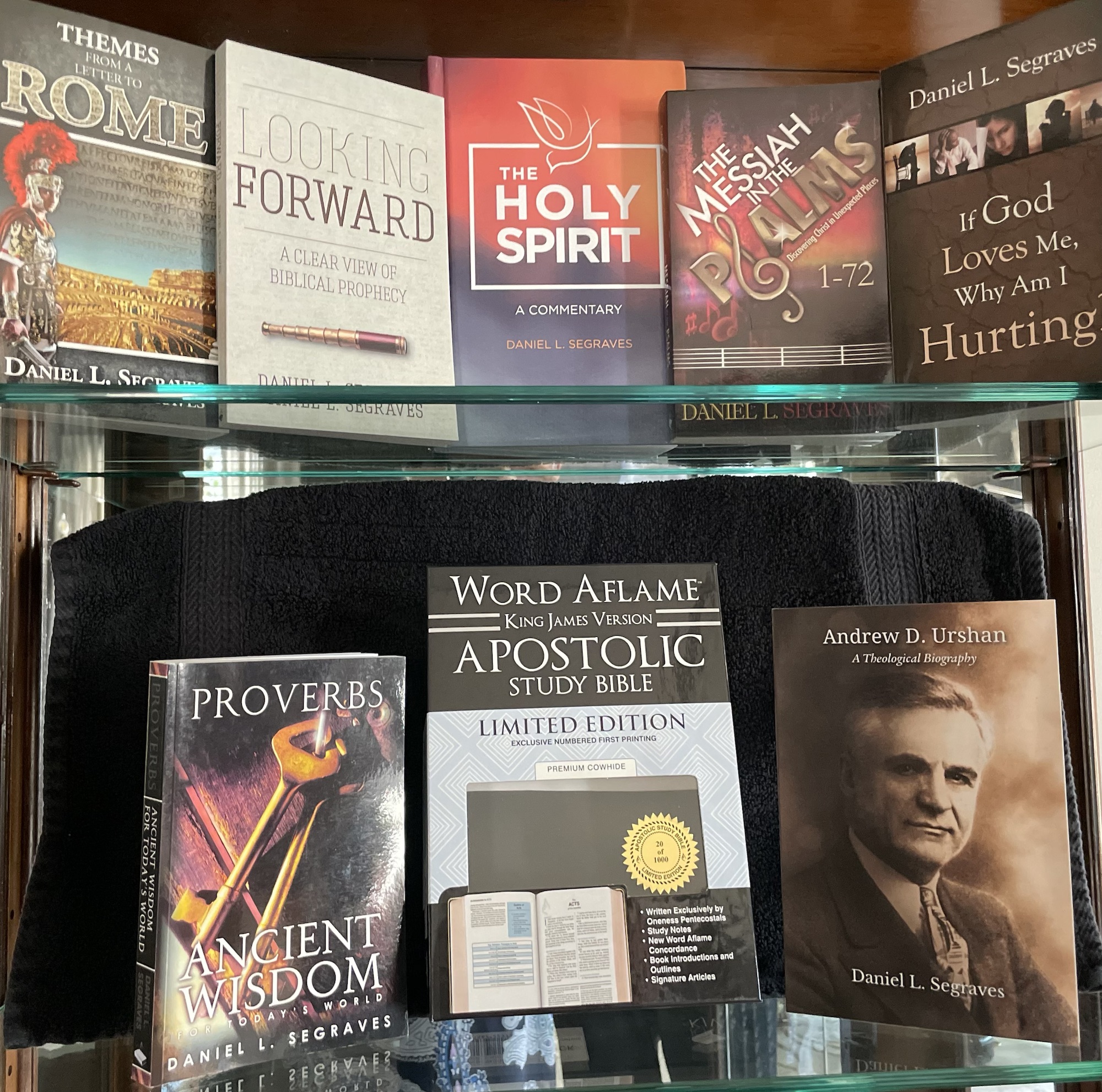
Daily Wisdom 331: Proverbs 14:33

Proverbs 14:33 (NKJV) — 33 Wisdom rests in the heart of him who has understanding, But what is in the heart of fools is made known.

Retaining wisdom, revealing folly. People of understanding will not tell all they know; they allow some things to rest in their hearts. Fools, on the other hand, find it quite impossible to hide the thoughts of their hearts. They will at some point be made public.

[archive]

Daily Wisdom 330: Proverbs 14:32

Proverbs 14:32 (NKJV) — 32 The wicked is banished in his wickedness, But the righteous has a refuge in his death.

The results of wickedness and righteousness. Those who are wicked have chosen a course in life that will destroy them, but those who are righteous have hope even in death. Life on earth will be the best and most pleasant experience the wicked will ever have, but life on earth will be the worst experience the righteous will ever have.

[archive]

Daily Wisdom 329: Proverbs 14:31

Proverbs 14:31 (NKJV) — 31 He who oppresses the poor reproaches his Maker, But he who honors Him has mercy on the needy.

The right attitude toward God and the poor. God takes note of the way people treat each other. This is why His Word repeatedly warns against the sin of respecting of persons (prejudice or favoritism). The second greatest commandment is to love our neighbors as ourselves (Mark 12:31). The commandment applies regardless of the economic status of one’s neighbors; in fact, it is especially important to help people who are in need. Thus, it is a reproach to God to oppress the poor, which includes taking advantage of them or imposing unreasonable and unjust requirements on them. The person who honors God will demonstrate it by being merciful to the poor. The ideal way to help them is on a personal, individual basis.

[archive]

Daily Wisdom 328: Proverbs 14:30

Proverbs 14:30 (NKJV) — 30 A sound heart is life to the body, But envy is rottenness to the bones.

Sources of health and illness. In the context of this verse, a “sound heart” is more than a physically healthy heart. It is sound in the sense of being pure and clean. It does not harbor bitterness, envy, pride, greed, or moral impurity. One of the greatest contributing factors to physical and emotional health is spiritual soundness. By contrast, envy contributes to physical and emotional illness. It is “rottenness to the bones,” which indicates a serious condition indeed, for bone marrow to a large degree is responsible for the condition of one’s health. The marrow contributes to the condition of the blood, which carries life-giving oxygen and nutrients to all parts of the body.

[archive]

Daily Wisdom 327: Proverbs 14:29

Proverbs 14:29 (NKJV) — 29 He who is slow to wrath has great understanding, But he who is impulsive exalts folly.

Self-control. As in Proverbs 14:17, here we see the value of controlling the temper. Great understanding will cause people to be slow to wrath. They realize there is much more at stake than merely getting one’s way. They look beneath the surface and behind the scenes. They are not so much interested in what happens as why. The New Testament reinforces the value of being slow to wrath (James 1:19). Those who are quick-tempered exalt folly.

[archive]

Daily Wisdom 326: Proverbs 14:28

Proverbs 14:28 (NKJV) — 28 In a multitude of people is a king’s honor, But in the lack of people is the downfall of a prince.

The blessing of population. The thing that brings honor to a ruler is how many people willingly serve him. A large or increasing population usually indicates the government is fulfilling some basic responsibilities: the country is not being ravaged by war, massacres, famine, deadly disease, or mass exodus. A decreasing population, however, indicates severe disruptions in society and will likely lead to massive social upheaval. A lack of people can lead to a lack of political, economic, or military strength.

[archive]

Daily Wisdom 325: Proverbs 14:26-27

Proverbs 14:26–27 (NKJV) — 26 In the fear of the LORD there is strong confidence, and His children will have a place of refuge. 27 The fear of the LORD is a fountain of life, To turn one away from the snares of death.

The benefits of revering the LORD. These two verses list four benefits of fearing, or revering, the LORD. They are: (1) strong confidence; (2) a place of refuge; (3) a fountain of life; and (4) deliverance from the snares of death. None are more confident than those who fear God. Their fear of God removes their fear of all else. Those who fear God need not fear trials and temptations, for they have a place of refuge in Him. Those who fear God need not fear death, for in Him there is only life and even physical death is but a transition to eternal life.

[archive]

Daily Wisdom 324: Proverbs 14:25

Proverbs 14:25 (NKJV) — 25 A true witness delivers souls, but a deceitful witness speaks lies.

True and deceitful witnesses. There is deliverance only in truth. Deceit never brings genuine freedom. Human wisdom may suggest a lie would spare someone from the consequences of one’s deeds, but even if physical freedom were gained in this way, a person would still be captive to fear and guilt and would face sin in judgment.

True witnesses are much more concerned about delivering the innocent from trouble than in condemning others. Even when true witnesses must testify to a person’s evil deeds, it is with the motive of bringing genuine freedom to the victim. There is true freedom only in truth. A deceitful witness, on the other hand, condemns the innocent.

[archive]

Daily Wisdom 323: Proverbs 14:24

Proverbs 14:24 (NKJV) — 24 The crown of the wise is their riches, but the foolishness of fools is folly.

Knowledge is like riches. Proverbs 14:18 states, “The prudent are crowned with knowledge” (NKJV). To the wise person, this crown of knowledge is true wealth. This person understands what is truly valuable. And as verse 18 also points out, the only alternative to knowledge is folly.

[archive]

Daily Wisdom 322: Proverbs 14:23

Proverbs 14:23 (NKJV) — 23 In all labor there is profit, but idle chatter leads only to poverty.

Labor profits; talk does not. It is common for people to spend great amounts of time talking about how they are going to achieve. But many of those who talk the most never get around to doing anything about it. If people would simply exert the same energy in working rather than talking, they would profit. Mere talking, however, leads to poverty. Rewards come from labor and effort, not empty words. Moreover, God rewards obedience, not mere profession.

[archive]