Daily Wisdom 236: Proverbs 11:19

Proverbs 11:19 (NKJV) — 19 As righteousness leads to life, So he who pursues evil pursues it to his own death.

Life or death. Righteous persons by their nature tend to do things that promote life. The places they go, the things they do, the words they say, and even what they eat and drink tend to promote life. Evil persons naturally do things that promote death. The places they go, the things they do, the words they say, the people they fellowship with, and what they eat and drink tend to promote death.

[arhive]

Daily Wisdom 235: Proverbs 11:18

Proverbs 11:18 (NKJV) — 18 The wicked man does deceptive work, But he who sows righteousness will have a sure reward.

Why “sure things” fail. The wicked person develops a scheme he thinks is foolproof. He believes he has all the angles covered. It is a sure thing in his mind. But it is a deceitful work. While it may appear to be certain to succeed, actually it is doomed to fail. But those who do right can be certain of the reward; it is a sure reward. It is always right to do right.

[archive]

Daily Wisdom 234: Proverbs 11:17

Proverbs 11:17 (NKJV) — 17 The merciful man does good for his own soul, But he who is cruel troubles his own flesh.

Doing ourselves a favor. When we have mercy on others, we strengthen our own souls. When we are cruel and refuse to show mercy, however, we bring trouble to our own bodies. It is good for us, spiritually and physically, to be merciful and kind. It is damaging, spiritually and physically, to be hard, unbending, and cruel.

[archive]

Daily Wisdom 233: Proverbs 11:16

Proverbs 11:16 (NKJV) — 16 A gracious woman retains honor, But ruthless men retain riches.

Honor or riches? A gracious woman (one who is full of grace) will never be dishonored. She will also bring honor to her husband (Proverbs 31:11-12).

On the other hand, ruthless (i.e., terrible and violent) men retain riches. Of course, honor is more valuable than riches.

Proverbs 22:1 (NKJV) — 1 A good name is to be chosen rather than great riches, Loving favor rather than silver and gold.

[archive]


Daily Wisdom 232: Proverbs 11:15

Proverbs 11:15 (NKJV) — 15 He who is surety for a stranger will suffer, But one who hates being surety is secure.

Dangers of co-signing. Surety means agreeing to stand good for another’s debt if the borrower fails to pay. The common form today is co-signing., The Book of Proverbs repeatedly warns of the dangers associated with this practice. (See Proverbs 6:1-2; 17:18; 20:16; 22:26; 27:13.) It is unwise because the need for this practice usually indicates that borrowers are unqualified for loans; they have already borrowed all they can afford to repay, or they have no demonstrable means of repaying debt, or they have already demonstrated a failure to be faithful in repaying obligations. It removes any incentive to correct their lack of qualification and to seek God for His provision, supply, and direction. In short, one of the wisest steps a person can take to secure his own financial position is to refuse to stand good for the debts of others. If one thinks a borrower has a genuine need, it may be better to give the borrower the money outright.

[archive]

Daily Wisdom 231: Proverbs 11:14

Proverbs 11:14 (NKJV) — 14 Where there is no counsel, the people fall; But in the multitude of counselors there is safety.

The value of counsel. There is safety in godly counsel. (See Psalm 1:1.) Those who reject counsel are sure to fail. When facing a major decision a person should seek counsel from a number of wise people in order to obtain a general consensus. Otherwise, one may overlook some important points. The person who declares, “Nobody is going to tell me what to do” is headed for destruction.

[archive]

Daily Wisdom 230: Proverbs 11:13

Proverbs 11:13 (NKJV) — 13 A talebearer reveals secrets, But he who is of a faithful spirit conceals a matter.

The sure sign of a talebearer. When a person confidentially offers to share secret or privileged information, that person is a talebearer. No matter what they promise, talebearers will pass on any secrets someone tells them to others. It is foolish to tell talebearers anything of significance, for they will not keep a confidence. They will often offer to share confidential information in order to give them leverage and to obligate others to reciprocate by sharing confidential information with them. It is easy to distinguish a talebearer from a person with a faithful spirit: the talebearer reveals secrets, but the faithful person conceals them.

[archive]

12 Days of Logos

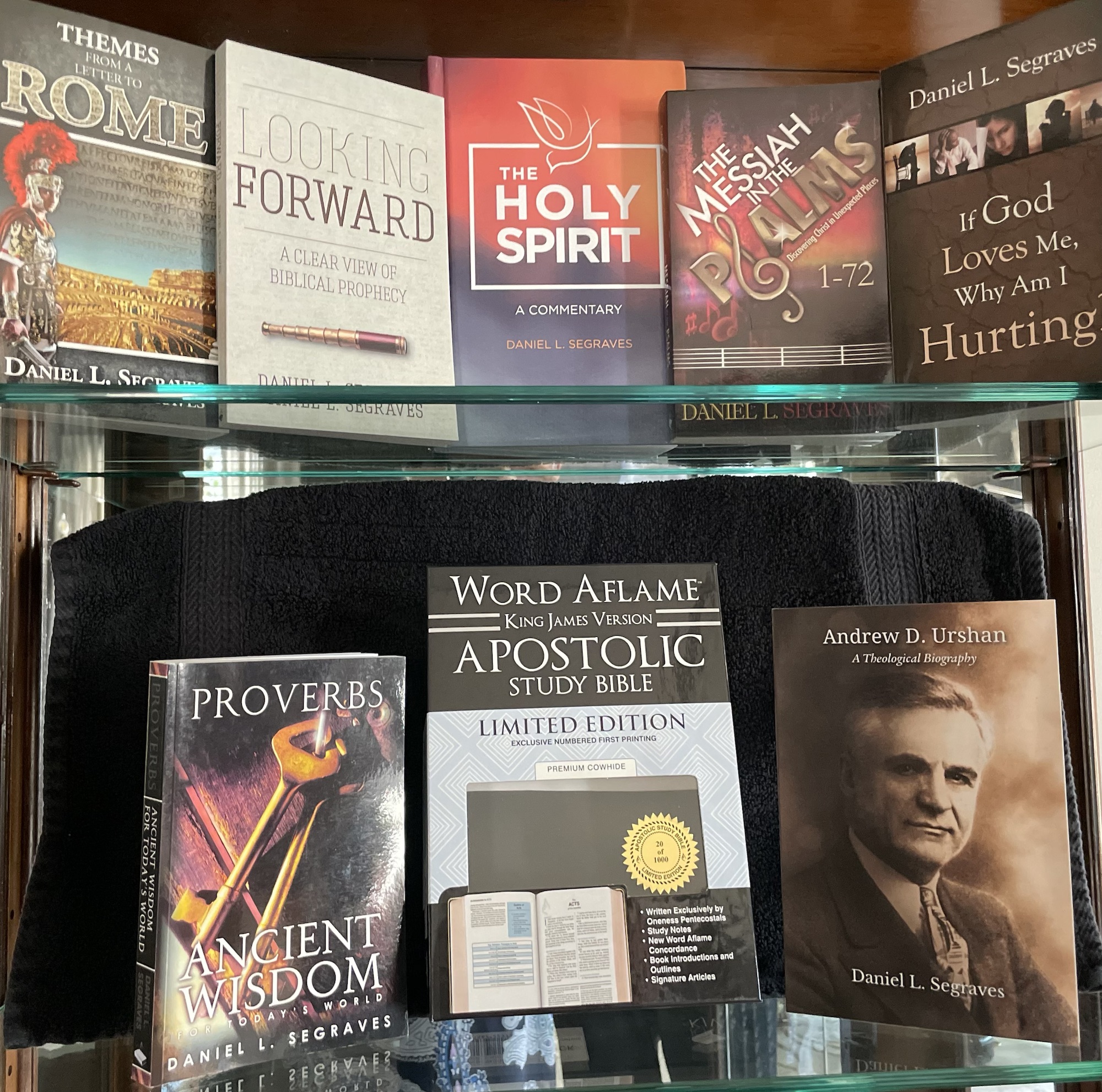
As I have mentioned, I use Logos Bible Software for my research and writing. It is, in my opinion, the premier Bible software available today. I was surprised and delighted recently to discover Logos even offers the study notes for the Apostolic Study Bible! I have been using this feature to speed up a writing project I’m currently working on for God’s Word for Life, a new curriculum made available by the Pentecostal Publishing House.

Today Logos is kicking off “12 Days of Logos,” during which 12 Logos products are available for 12 days at 50-65% off. If you’re interested, you can check it out by clicking on the link below.

https://partner.logosbible.com/click.track?CID=436653&AFID=472111

[archive]

Daily Wisdom 229: Proverbs 11:12

Proverbs 11:12 (NKJV) — 12 He who is devoid of wisdom despises his neighbor, But a man of understanding holds his peace.

Lack of wisdom. When people despise their neighbors, it is a sign that they lack wisdom. A central biblical principle is that people are to be concerned about the welfare of their neighbors. Not only does this attitude promote strong and secure neighborhoods, but it also provides an opportunity for Christian witness. Those who despise and mistreat their neighbors lay the groundwork for their own destruction.

On the other hand, if people know how to abstain from contention or retaliation, even in the face of imagined or real wrongs, it is a sign that they have understanding. One of the greatest evidences of genuine strength of character is the ability to refrain from saying damaging things that could be said.

[archive]

Daily Wisdom 228: Proverbs 11:10-11

Proverbs 11:10–11 (NKJV) — 10 When it goes well with the righteous, the city rejoices; And when the wicked perish, there is jubilation. 11 By the blessing of the upright the city is exalted, But it is overthrown by the mouth of the wicked.

How a city is blessed. A city will be blessed when the righteous are in positions of authority and influence. (See Proverbs 29:2.) But if the wicked capture these positions, the city will suffer. (See Proverbs 29:8.) Many cities, states, and nations suffer a leadership crisis because God’s people are unwilling to involve themselves in civic affairs.

In the Old Testament, God’s people sometimes held positions of authority and influence. Moses was both a religious and civil ruler. Daniel was the first of three presidents set over 120 princes, and he answered directly to Darius the king (Daniel 6:1-3). His friends Shadrach, Meshach, and Abednego served directly under him (Daniel 2:46-49). Joseph was the governor of Egypt, serving directly under Pharaoh (Genesis 41:41-44). There were saints in Caesar’s household (Philippians 4:22). At least one early Christian, Erastus, held a very responsible civic position: city chamberlain, or treasurer (Romans 16:23).

In a republican form of government, such as the United States and Canada have, it is the duty of every citizen to vote. It is also their privilege to become informed, influence other voters, attempt to convince those in office of their views, and run for office themselves. Christians who refuse to vote have no place to criticize the actions of those in office.

[archive]