I post papers I have written, some during my graduate and post-graduate studies, some in response to other papers, and some written for other purposes like Sunday school classes or Bible studies. I also post observations on whatever comes to my mind and videos from teaching sessions.
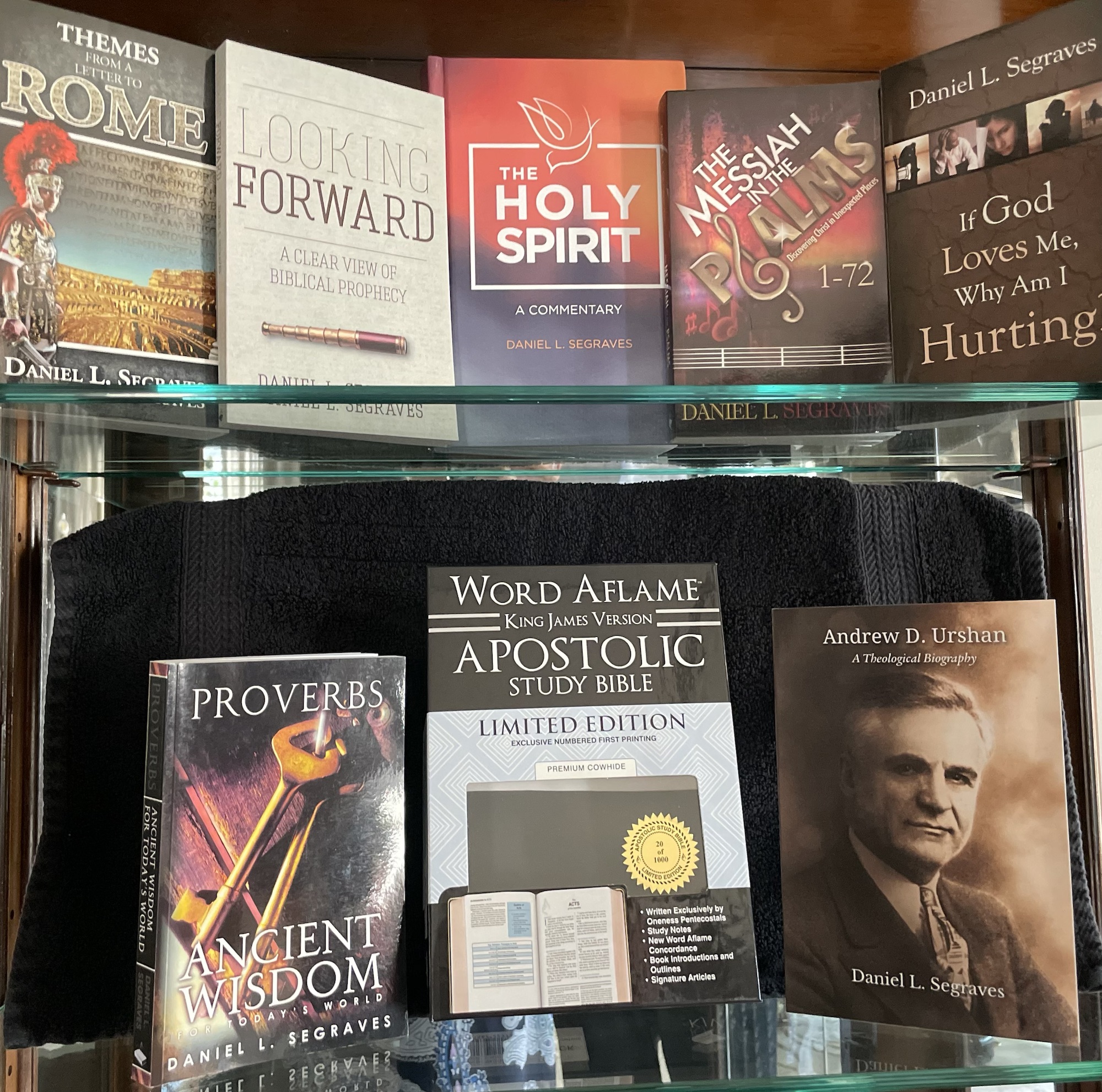
The link above takes you to the Amazon page for my newest book, The Messiah in the Psalms: Discovering Christ in Unexpected Places, Volume Two. This 261 page book includes introductory information about the Book of Psalms and my comments on Psalms 73-106.
You can download a free sample of the book.
I have begun work on volume three of this series. My first volume on this theme produced a 382 page book covering Psalms 1-72. It is available both on Amazon and at pentecostalpublishing.com. My past research and writing on this topic, which is suggested by Jesus’ words in Luke 24:44, leads me to believe that my work on the third and final volume will take about two years.
Then He said to them, “These are the words which I spoke to you while I was still with you, that all things must be fulfilled which were written in the Law of Moses and the Prophets and the Psalms concerning Me” (Luke 24:44, NKJV).
Today I discovered that my newest book, The Messiah in the Psalms, volume 2, is available both in paperback ($18.99) and eBook ($9.99) formats at pentecostalpublishing.com.
I appreciate all who are interested in this, my twenty-third book, and I look forward to meeting those who come to my booksigning next Thursday at 9:15 p.m. at the 80th anniversary of the United Pentecostal Church International in St. Louis, Missouri.
I was pleased this morning to see my new book listed among “Newest Releases” at pentecostalpublishing.com. This 256-page work includes 384 endnotes (see below) and explores in depth the witness to Jesus Christ in Psalms 73-106. I have agreed to be available for book signings at the upcoming eightieth general conference of the United Pentecostal Church International. Next Thursday, September 25, at 9:15 p.m. I plan to be at the Pentecostal Publishing House display to meet and sign books for “all who yearn to discover how the Scriptures testify of Jesus.”
Who wants to read footnotes?
Some readers have no interest in wading through footnotes. When they appear at the bottom of a page, they see this as a sign that the book is not for them! Others love the notes and head to them first, figuring that’s where the vital information is found.
Recognizing the aversion some people have to notes, many publishers place them in the back of the book as endnotes. This way, the information is preserved for those who want it, but others who fear getting bogged down can nevertheless enjoy and profit from the book’s major content.
My book follows this approach. If you’re not interested in notes, you’ll never see them. But if you love them, as I do, head to page 225, and you can savor thirty-one more pages of insight.
For instance, at the end of eleven pages that examine Psalm 81, the final paragraph reads: It would be impossible to describe the miraculous mystery of the Incarnation more fittingly than in Paul’s words in I Timothy 3:16: “And without controversy great is the mystery of godliness: God was manifested in the flesh, justified in the Spirit, seen by angels, preached among the Gentiles, believed on in the world, received up in glory” (NKJV). In knowing Jesus, we know the Creator Himself. This wondrous truth is rooted in the very first verse of the Bible.
But wait. This paragraph points to two endnotes offering more information on I Timothy 3:16. Here they are: Footnote 151: “Instead of ‘God,’ some English translations read ‘He,’ ‘He Who,’ ‘Who,’ or ‘which.’ This is because these translations follow a Greek variant that appears only in a few manuscripts. One translation even reads ‘Christ’ instead of God. No Greek manuscript includes ‘Christ’ in I Timothy 3:16. The great majority of Greek copies have ‘God,’ which is seen in the KJV, NKJV, and other translations.”
And finally, Footnote 152: “The Greek text of I Timothy 3:16 could be legitimately read as follows: ‘God was manifested in the flesh, [God was] justified in the Spirit, [God was] seen by angels, [God was preached (i.e., proclaimed)] among the Gentiles, [God was] believed on in the world, [God was] received up in glory.” This is because each of these verbs (i.e., manifested, justified, seen, preached, believed on, and received up) is in the aorist passive indicative form. ‘God’ is the noun subject to which each of these verbs refers.
So what do you think? Is it worth it to look a bit further?