Is Psalm 87 a Pentecostal psalm?

September 13, 2024 | Daniel L. Segraves, Ph.D.

I am happy to report that I have finished my work on Psalm 87! As with my study of Psalm 86, I was once again delighted to discover new insights. In this case, my convinction was strengthened that Psalm 86:9-10 provides a profound link to Psalm 87:4-6 and points ahead to Acts 2.

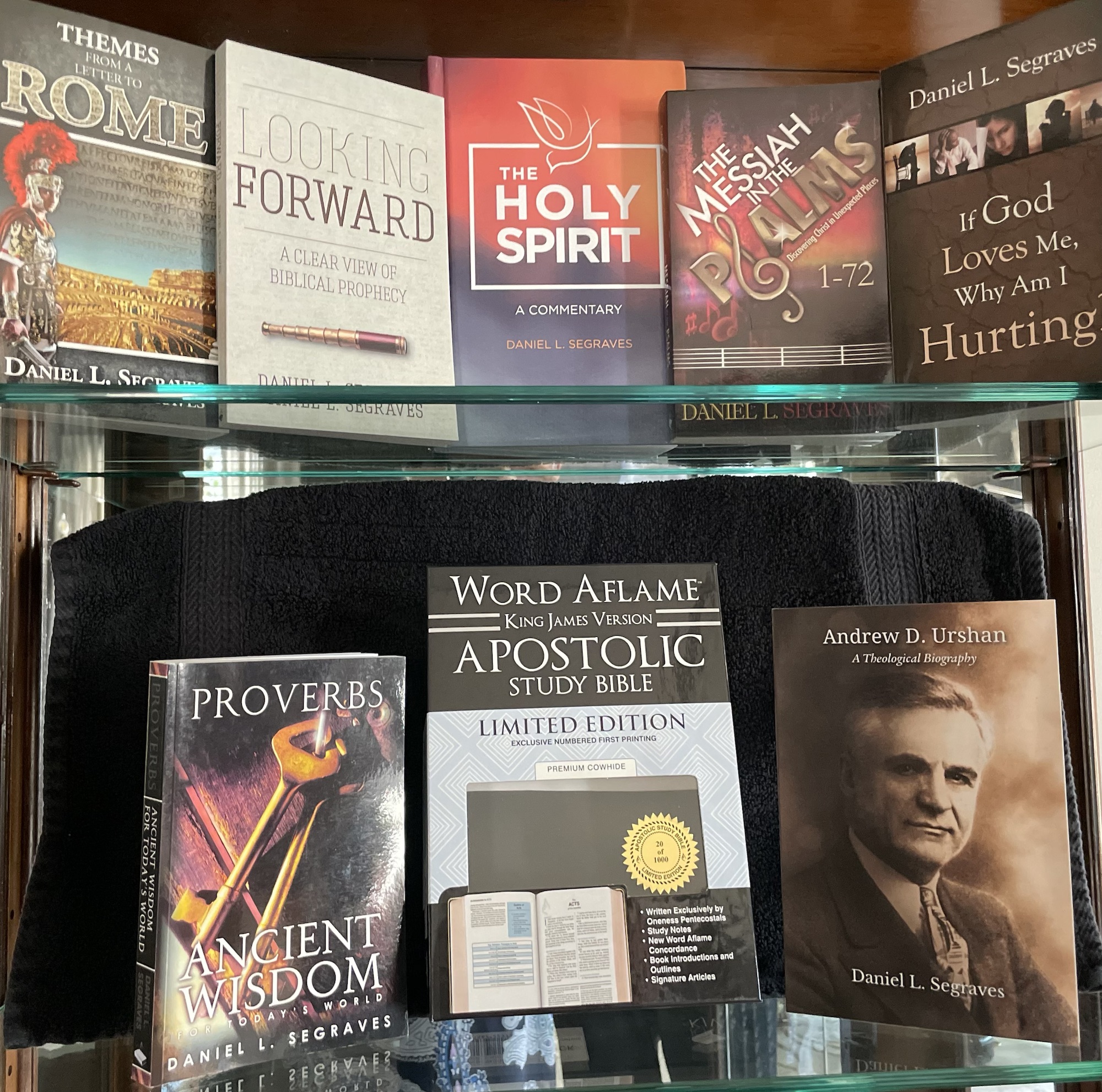
I can’t describe the results of my study in this post. They will be included in the second volume of my commentary titled The Messiah in the Psalms: Discovering Christ in Unexpected Places. The first volume is available both in hard copy and ebook formats at pentecostalpublishing.com and amazon.com. My goal is to finish this second volume, which will include Psalms 73-106 and submit it to the editor by the end of this year.

Here is a paragraph from my comments on Psalm 87. As you read it, keep in mind that people from Egypt were included among those who gathered in Jerusalem on the Day of Pentecost. (See Acts 2:9-10.)

Psalm 86:9 suggests a link between Psalm 86 and Psalm 87 and perhaps even a prophetic connection between these psalms and the events of the Day of Pentecost as recorded in Acts 2. This idea begins as follows: “All nations whom thou hast made shall come and worship before thee, O Lord; and shall glorify thy name” (Psalm 86:9). The nations mentioned in Psalm 87 include “Rahab,” an “emblematic name of Egypt,”[1] Bratcher and Reyburn explain that Egypt “translates Rahab, a poetic name for the country (see Isa 30:7).”[2] This can be seen in the Hebrew text of Isaiah 30:7, where the helpless Egyptians are identified as “Their strength is to sit still” (KJV). The NKJV renders the final three words in this verse “Rahab-Hem-Shebeth.” The Hebrew text here transliterates as rahab hēm šābet [רַ֥הַב הֵ֖ם שָֽׁבֶת]. In this context, the reason Rahab is used to represent Egypt is to call attention to Egypt’s history of arrogance and violence. Psalm 87, however, anticipates an event that will transform the nations mentioned in verse 4, an event that will be characterized by these nations coming to worship the Lord and glorify His name (Psalm 86:9). This will be connected with these nations coming to understand that the Lord alone is God (Psalm 86:10).


[1] Richard Whitaker et al., The Abridged Brown-Driver-Briggs Hebrew-English Lexicon of the Old Testament: From A Hebrew and English Lexicon of the Old Testament by Francis Brown, S.R. Driver and Charles Briggs, Based on the Lexicon of Wilhelm Gesenius (Boston; New York: Houghton, Mifflin and Company, 1906).

[2] Robert G. Bratcher and William David Reyburn, A Translator’s Handbook on the Book of Psalms, UBS Handbook Series (New York: United Bible Societies, 1991), 759.

Now, to Psalm 88!

[archive]

Now, on to Psalm 87

September 8, 2024 | Daniel L. Segraves, Ph.D.

Six days ago, on September 3, 2024, I announced the completion of my work on Psalm 85. Now, I am pleased to say my research and comments on Psalm 86 were finished yesterday, and I have begun work on Psalm 87. [Please understand the word “finished” in this endeavor must be defined to allow for revisions or editorial work at some future point!]

I enjoyed studying Psalm 86. I frequently ask our Lord in prayer to help me rightly interpret the Scriptures and to understand how they testify of Him (Luke 24:44). I genuinely believe He opened my eyes to messianic themes I had not seen before in this psalm. I will share a bit of that with you in this post.

But first, I want to express my appreciation to my wife, Susan, for her work in redesigning the masthead of my blog. She has a great sense of design and works hard to get everything just right. Thank you, Susan!

Now, here are some of my comments on Psalm 86:16:

Psalm 86:16 indicates there is a son of someone who is the handmaid of the Lord, but the verse does not identify this son’s father. There is a clue to his identity, however, within the verse and in Psalm 89:26: “He shall cry unto me, Thou art my father, my God ….” If the person whose prayer is recorded in Psalm 86 is the same as the one whose prayer is found in Psalm 89:26, we know that the “son” of Psalm 86:16 is the Messiah, Jesus Christ.

Who, then, is His mother, the handmaid of the Lord? After her encounter with the angel Gabriel, who announced to Mary, “And, behold, thou shalt conceive in thy womb, and bring forth a son, and shalt call his name JESUS,” Mary responded with these words: “Behold the handmaid of the Lord: be it unto me according to thy word” (Luke 1:31, 38). After her visit with Elisabeth, Mary said, “My soul doth magnify the Lord, and my spirit hath rejoiced in God my Saviour. For he hath regarded the low estate of his handmaiden: for, behold, from henceforth all generations shall call me blessed” (Luke 1:46-48).

[Archive]

Celebrating our first date!

September 5, 2024 | Daniel L. Segraves, Ph.D.

Daniel and Susan Segraves

Our first date was on June 15, 2013. I invited Susan to a concert by the Ambassadors of Harmony, an a capella men’s chorus consisting of more than 100 members. Their harmonies are breathtaking.

I discovered the AOH on YouTube while still living in California. I had no idea the chorus was headquartered in Saint Charles, Missouri, next door to Saint Peters, where Susan and I now live. Nor did I know their concerts were performed at the Touhill Performing Arts Center on the campus of the University of Missouri in St. Louis.

Many members of UPCI churches in the St Louis metro area attend these concerts, and on our first date, several of our friends, seeing us together for the first time, quickly figured out what was going on!

The photo above shows us at our most recent visit to hear the AOH. We are standing before a Steinway piano. The reason we have such big smiles is that we are happy people on the verge of celebrating our eleventh year of marriage! God has blessed us richly. We are deeply grateful He brought us together, and I am so glad Susan said, “Yes!”

[archive]

At last, Psalm 85 is finished.

September 3, 2024 | Daniel L. Segraves, Ph.D.

I had hoped to have the second volume of my commentary on the Book of Psalms finished in time for publication by this year’s general conference of the United Pentecostal Church International. But that was not to be.

Do I have an excuse for not meeting this goal? If I tried hard enough I could probably find many excuses, but I will limit them to two: (1) I enrolled in an online course on Biblical Aramaic not long after the first of this year. This has devoured quite a bit of my time, and it’s not yet finished. I have enjoyed this study, however, and I plan to press on. (2) The reason for the study of Aramaic was to enable me to do some research in the Aramaic Targums. This is relevant to my study of Book Two and Book Three of the Psalter (Psalms 73-106). In connection with this, I wrote and presented an eighteen page paper at the symposium sponsored by Urshan Graduate School of Theology. The paper was titled “Aramaic and LXX Influences on Messianic Psalms 80 and 81.”

I enjoy research and writing. I have especially delighted in my work on the Psalms. This current project follows my book The Messiah in the Psalms: Discovering Christ in Unexpected Places, a 382 page book published by WAP Academic, a division of Word Aflame Press. It is available at pentecostalpublishing.com and amazon.com in hard copy and ebook formats.

So far, the second volume consists of about 114 pages with 213 footnotes. Here is the last paragraph of my comments on Psalm 85:

The physical proximity of Psalms 84 and 85 is not the only indication of their linkage. They are also connected thematically by an idea found in Psalm 84:11 (i.e., “no good thing will he withhold from them that walk uprightly”) and Psalm 85:12 (i.e., “Yea, the Lord shall give that which is good”). Both psalms are “for the sons of Korah.”

[archive]