Logos 9 Discount Ends February 1, 2021

I have recommended Logos Bible Software several times, both here and on Facebook. It is the software I use for research and writing. It is, in my opinion, the best in today’s market, offering the most advanced level of resources and technology.

If you are interested in the latest iteration of Logos, known as Logos 9, you can click on the link below to check it out. If you decide to make a purchase, a 15% discount is available until February 1. In addition to the discount, you can select five free books.

https://partners.faithlife.com/click.track?CID=431490&AFID=47


[archive]


Daily Wisdom 253: Proverbs 12:6

Proverbs 12:6 (NKJV) — 6 The words of the wicked are, “Lie in wait for blood,” But the mouth of the upright will deliver them.

Words tell all. How is it possible to discern if people are wicked? Their conversation betrays them. They constantly discuss “getting even” with someone or taking advantage of someone. The theme of their conversation will be to “lie in wait for blood.”

How is it possible to discern if people are upright? Their conversation will reveal them also. The theme of their conversation will be how to rescue another or how to help some person in need. And their honest and proper speech will deliver them from much trouble.

[archive]

777 views!

Today’s email included an advertisement from the Pentecostal Publishing House for “Resources to Teach the Resurrection.” I noticed the Discipleship Series included a series of lessons I was privileged to write titled “Thriving in Babylon.”

While I was on the PPH website, I thought I would check to see what had been going on with my newest book, The Holy Spirit: A Commentary. I was interested to see that the video of my interview with Caleb Saucer had precisely 777 views! I won’t attach any theological significance to this, but for those who haven’t seen the interview yet, I am posting it here.


[archive]

Daily Wisdom 252: Proverbs 12:5

Proverbs 12:5 (NKJV) — 5 The thoughts of the righteous are right, But the counsels of the wicked are deceitful.

Right thoughts, wrong counsel. Righteous people start at the right place: the thoughts. Not only are their words right, but their inmost thoughts are right. All else is born of the thoughts. An old adage declares: “Sow a thought; reap a deed. Sow a deed; reap a habit. Sow a habit; reap a character. Sow a character; reap a destiny.” It all begins with the thoughts. If our thoughts are right, our actions will be right. If our actions are right, we will be right. This is why every thought must be brought into captivity unto the obedience of Christ (II Corinthians 10:4-5).

While the righteous think right thoughts, the wicked not only think evil but also speak evil. They give wrong and deceitful counsel. In the multitude of godly counselors there is safety (Proverbs 11:14), but wicked counsel simply compounds wickedness. While there is safety in the multitude of right counsel, there is destruction in the multitude of wicked counselors.

[archive]

Daily Wisdom 251: Proverbs 12:4

Proverbs 12:4: A virtuous woman is a crown to her husband: But she that maketh ashamed is as rottenness in his bones.

The virtuous woman. The phrase “a virtuous woman” appears three times in Scripture: here, and in Proverbs 31:10 and Ruth 3:11. In the Hebrew Scriptures, the order of the books often serves an interpretive purpose. That is the case here. The Book of Ruth follows the Book of Proverbs, offering Ruth as an example of the virtuous woman described in Proverbs 31:10-31.

[archive]


The Holy Spirit in the Book of Romans 15:13, 16, 18-19, 30

This next Sunday, January 17, 2021, I plan to teach a lesson at The Sanctuary UPC that examines the work of the Holy Spirit in Romans 15:13, 16, 18-19, 30. The study guide for this lesson is posted below. It is excerpted from my book The Holy Spirit: A Commentary.

As I have done with the previous two lessons in this series, I plan to post the video from this class by Monday, January 18. The study guide for the first lesson in this series was posted on January 2, 2021; the video followed on January 3. This lesson covered Romans 8:8-27. The study guide for the second lesson in the series was posted on January 8, and the video on January 10.


The Holy Spirit in the Book of Romans 15:13, 16, 18-19, 30

January 17, 2021

Daniel L. Segraves, Teacher

danielsegraves.com

Twitter: @danielsegraves

[1] The only way believers can abound in hope is by the power of the Holy Spirit (Romans 15:13). Nothing can develop biblical hope apart from the power of the indwelling Holy Spirit. Hope is not positive thinking, positive mental attitude, or possibility thinking. It results only by relying on the power of the Holy Spirit within.

[2] Paul’s reference to “the offering of the Gentiles” seems intended to remind his Jewish readers that the Gentiles’ salvation was accomplished by the will of God (Romans 15:16). Thus, there was no reason for Jewish believers to hold Gentile brethren at arm’s length. If Gentiles were acceptable to God, they should be acceptable to Jewish Christians. (See Romans 15:4-12.) If Gentiles were sanctified, or set apart unto God, by the Holy Spirit, no legitimate reason remained for Jewish Christians to reject them.

[3] How Christ accomplished the conversion of Gentiles through Paul was “in word and deed . . . in mighty signs and wonders, by the power of the Spirit of God” (Romans 15:18-19).[1] Paul’s ministry was not limited to a vocal declaration of the gospel; it included confirming the word with signs following. Nothing in Scripture suggests God intended to restrict this kind of ministry to the first century.[2],[3]

[4] Paul was apparently in Corinth when he wrote his letter to the Romans. He knew difficulties awaited him in Jerusalem. (See Acts 20:22-24; 21:4, 10-14.) Even though Agabus, a prophet, and other believers warned Paul about the consequences of going to Jerusalem, he did not hesitate to pray for deliverance. He was not unwilling to face whatever was in store, but he was no fatalist. Since no man is omniscient, there is always a place for prayer for deliverance from difficulties – even those that are foretold, unless God specifically declares His refusal to remove the obstacles. So Paul appealed for prayers “through the Lord Jesus Christ,” or based on the believers’ unity together in Him (see Romans 6:3-8; 12:4-5), and “through the love of the Spirit,” meaning the love that results from the indwelling Holy Spirit (Romans 15:30).

Summary of the Holy Spirit in Romans

  1. The Spirit declared Jesus to be the Son of God by the Spirit’s role in His resurrection from the dead.
  1. The Old Testament practice of circumcision symbolized New Testament realities involving the Spirit.
  1. The Spirit produces hope and love, and believers are to be led by the Spirit.
  1. The kingdom of God does not involve what believers eat or drink. It involves the Holy Spirit.
  1. Signs and wonders accomplished by the Spirit play a vital role in the spread of the gospel.

[1] The phrase “For I will not dare to speak of any of those things which Christ hath not wrought by me” (KJV) is not the way we would typically express this idea today, so Paul’s point is somewhat obscured. Today’s translations tend to render this phrase something like this: “For I will not venture to speak of anything except what Christ has accomplished through me to bring the Gentiles to obedience—by word and deed” (Romans 15:18, ESV). Compare this verse with Acts 15:12; 21:19 to see that what Paul attributes to Christ in Romans he attributes to God in Acts.

[2] See Mark 16:17-20; Acts 13:9-12; 14:3, 8-10, 19-20; 19:11-12; 20:9-12; 28:1-8; I Corinthians 2:1-5; II Corinthians 12:12; Hebrews 2:3-4.

[3] My Master of Arts in Exegetical Theology thesis is titled “That Which Is Perfect (I Corinthians 13:10): A Non-Eschatological Approach.” This thesis, which I submitted in June 1993, examines the claim that the spiritual gifts have ceased. It is available at pentecostalpublishing.com for $2.99.

[archive]
Daily Wisdom 250: Proverbs 12:3

Proverbs 12:3 (NKJV) — 3 A man is not established by wickedness, But the root of the righteous cannot be moved.

No stability in wickedness. As a continuing development of the theme begun in Proverbs 12:2, this verse declares that wickedness will never establish a person. As Asaph realized at last, though the wicked may seem to prosper for a time, their feet are in slippery places. (See Psalm 73, especially verse 18) But righteousness roots people so that they cannot be moved. It may take some time before the evidence of a deep root is visible. The wicked may, during that time, appear to be accomplishing more than the righteous, for the wicked spends little time developing a root system. What they do is on the surface, visible only to the human senses.

This truth is illustrated in the story Jesus told of a foolish man who built his house directly on the sand, while a wise man took the time to build on a solid foundation. While the house of the wicked may have gone up quickly, it was destroyed just as rapidly. (See Matthew 7:24-27.)

[archive]

Daily Wisdom 249: Proverbs 12:2

Proverbs 12:2 (NKJV) — 2 A good man obtains favor from the Lord, But a man of wicked intentions He will condemn.

The most valuable blessing. What could be superior to obtaining the Lord’s favor? When a person chooses to do good, the blessings of the Lord will be upon that person. Genuine spiritual goodness comes only from the presence of the Holy Spirit. (See Galatians 5:22-23.) The good person will have no need of wicked tactics, favoritism, under-the-table activities, or good-luck charms. Indeed, God will judge the person who relies on anything other than Him for blessings, prosperity, and provision.

[archive]

Daily Wisdom 248: Proverbs 12:1

Proverbs 12:1 (NKJV) — 1 Whoever loves instruction loves knowledge, But he who hates correction is stupid.

Instruction, knowledge, and correction. Not only do we see the relationship between instruction and knowledge  in this verse, but also the relationship between these two and correction. Instruction and knowledge go together. There will be no knowledge where there is no instruction. Instruction can come from the school of life, but often an actual human teacher will be involved. In fact, human teachers are necessary in the church. (See Romans 12:4-7; I Corinthians 12:28; Ephesians 4:11-12.)

The word stupid tends to  be so offensive many well-spoken people rarely use it. The KJV uses “brutish” instead. But more recent translations agree with the NKJV. The Hebrew baar, translated “stupid” is defined as “senseless, i.e., pertaining to lacking understanding, but implying other negative moral imperfections as well” (James A. Swanson, Dictionary of Biblical Languages with Semantic Domains [Logos Bible Software]).

The person described as “stupid” hates being told what to do. This person will never have true knowledge, for instruction often takes the form of correction. For example, when an answer on a test is marked wrong, that is both correction and instruction. When a trainee has to be shown again how to do his job, that is both correction and instruction. A person who is willing to accept correction will find that it contributes greatly to his education.


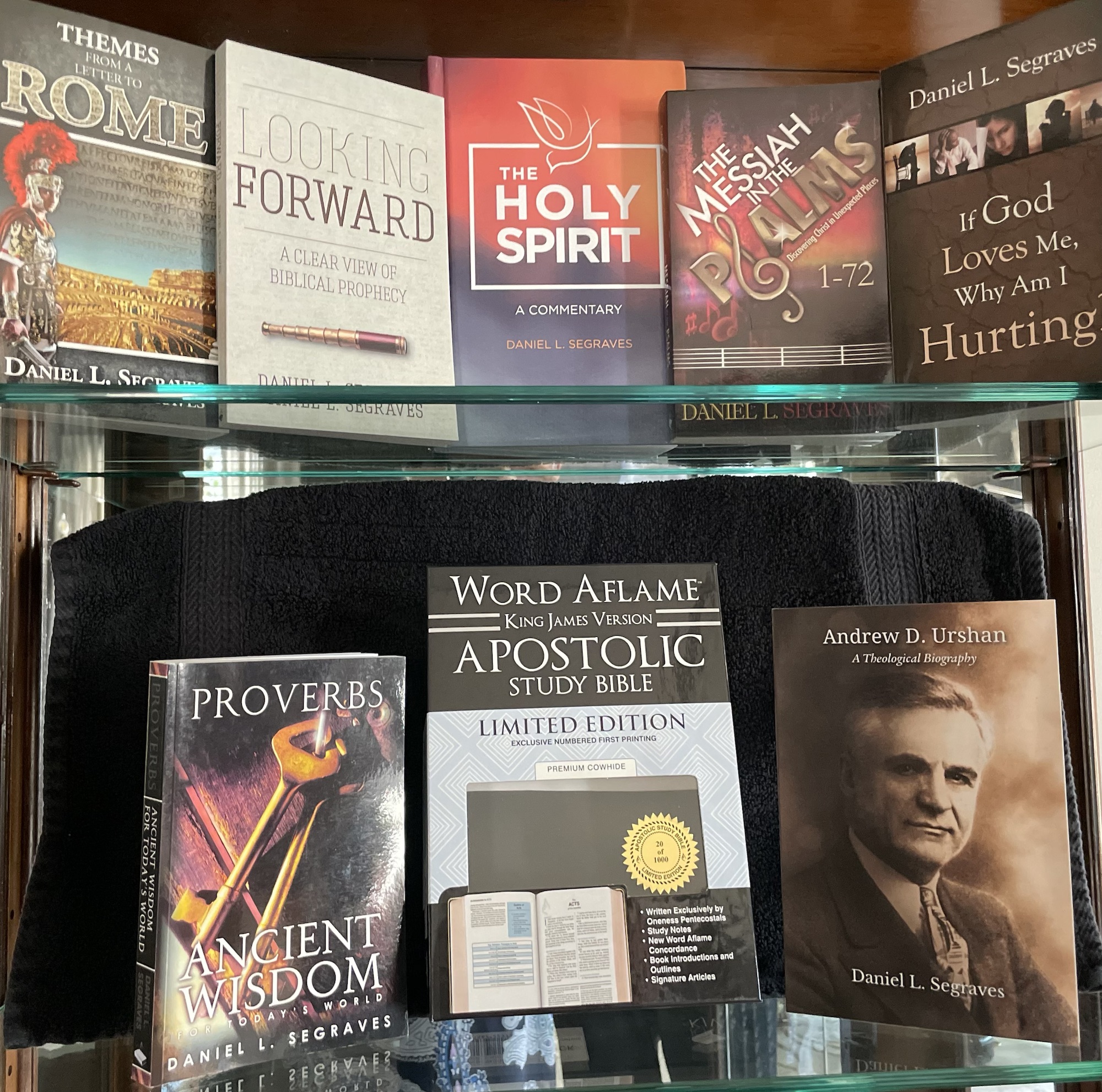
A reminder: These “Daily Wisdom” comments are drawn from my commentary on the Book of Proverbs, which is titled Ancient Wisdom for Today’s World. The book is published by Word Aflame Press and is available at pentecostalpublishing.com and from Amazon and Apple Books.

[archive]